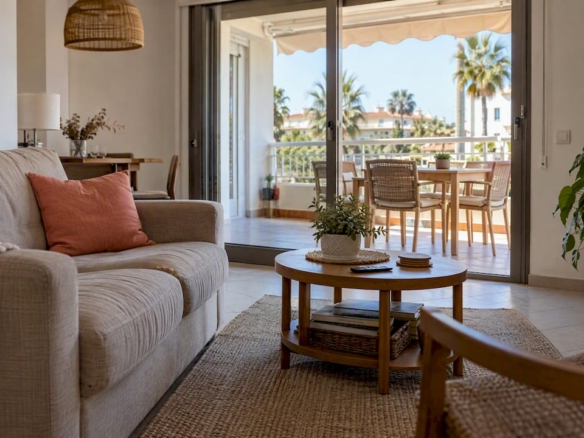
Yes. In Catalonia, a valid cédula de habitabilidad is required to sell a home, rent it out, or connect utilities like water and electricity. The Agència de l’Habitatge de Catalunya issues this certificate under Decreto 141/2012, the regulation that sets minimum habitability standards for every dwelling in the region.
If you’re buying, selling, or renting right now, your first move is simple:
- Check the property’s cadastral reference against the Agència’s official registry, or
- Hire a qualified technician (architect, arquitecte tècnic, or engineer) to inspect the property if no valid record turns up.
Quick fact: the legal deadline for the Agència to resolve a cédula application is 30 working days, though real-world processing often runs longer.
Key Takeaways
A valid cédula de habitabilidad, issued by the Agència de l’Habitatge de Catalunya under Decreto 141/2012, is legally required before you sell, rent, or activate utilities on a Catalan dwelling.
| Point | Details |
|---|---|
| Confirm requirement first | Every sale, rental, and utility activation in Catalonia needs a current cédula on file. |
| Check validity by type | First occupation lasts 25 years; second occupation and rehab first-occupation last 15 years. |
| Use the official registry | Search the Agència’s buscador by cédula number or cadastral reference before assuming validity. |
| Budget real time and cost | Legal resolution is 30 working days, but plan for 2 to 8 weeks plus technician fees. |
| Negotiate around gaps | Missing certificates should trigger a precontract deadline clause, not a silent assumption it exists. |
Table of Contents
- What types of cédula de habitabilidad exist in Catalonia?
- Who is responsible for getting the cédula, and when?
- How do you apply for a cédula de habitabilidad step by step?
- What does a cédula de habitabilidad cost in Catalonia?
- How do you check if a property already has a valid cédula?
- Costa Cambrils’s practical checklist for buyers and sellers
- What happens when a cédula expires or gets denied?
- Why this certificate deserves more attention than most guides give it
- Ready to move forward on a Costa Dorada property?
- Sources
What types of cédula de habitabilidad exist in Catalonia?
Catalonia recognizes three categories, and which one applies depends on the building’s history, not just its current condition. A first occupation cédula covers newly built homes that have never been inhabited. A first occupation after rehabilitation applies when a major renovation changes the building’s structure or use enough to require a fresh habitability check. A second occupation cédula covers existing homes changing hands or being re-certified, and it’s the type most sellers in Catalonia end up needing.
Validity periods differ by type, and this matters more than most owners realize:
- First occupation certificates last several decades.
- Second occupation and first-occupation-after-rehabilitation certificates last a shorter but significant period.
Decreto 141/2012 is the legal source behind all three definitions, and it also spells out the minimum surface area, ventilation, and room requirements a dwelling must meet before the certificate can be granted. A home built in 2001 with a first-occupation cédula, for instance, would need renewal around 2026, right when many owners start asking whether their paperwork still holds up.
Who is responsible for getting the cédula, and when?
The obligation almost always falls on the transmitting party, meaning the seller in a sale or the landlord in a rental, unless a contract explicitly shifts that responsibility elsewhere. Buyers rarely take this on themselves because the certificate belongs to the dwelling’s legal status, not to whoever happens to occupy it.
You’ll need a valid cédula at several predictable moments:
- Before signing a sale deed at the notary
- Before formalizing a rental contract
- When a dwelling changes from one use to another
- When activating or transferring water, gas, or electricity service
Skipping this step causes real friction. Utility companies routinely reject activation requests without a current cédula on file, notaries flag its absence during signing, and municipalities in Catalonia can fine owners who rent out uncertified dwellings. None of that friction shows up until you’re already mid-transaction, which is exactly when it’s most expensive to fix.
How do you apply for a cédula de habitabilidad step by step?
The process runs through a technician’s inspection first, then a formal submission to the Agència de l’Habitatge or, in some municipalities, a local housing office.
- Hire a qualified technician. An architect, arquitecte tècnic, or engineer inspects the dwelling and drafts the habitability certificate, the document that anchors the entire application.
- Gather supporting paperwork. For a second-occupation cédula, you’ll typically need the technician’s certificate, the cadastral reference, valid ID, and, where the building’s age is relevant, a declaration of antiquity. New builds instead require the final works certificate (certificat final d’obra).
- Submit the application. Either the technician or the owner can file it, and the Agència strongly favors telematic (online) submission over paper.
- Pay the fee. Telematic filing carries a bonification that lowers the cost compared to in-person submission.
- Wait for resolution. The legal window is 30 working days, though incomplete files trigger a subsanación request that resets part of the clock.
Pro Tip: Ask your technician to double-check antiquity documentation and measurement records before filing. Incomplete technical files are the most common cause of delay, and a subsanación request can add weeks to a process that’s supposed to take one month.
What does a cédula de habitabilidad cost in Catalonia?
Fees vary by dwelling type and number of units in the application, and the Agència applies a 30% discount for telematic filing, which makes online submission the more economical choice in nearly every case. Municipal offices, including Barcelona’s electronic office, publish their own local fee schedules alongside the regional ones, so exact amounts depend partly on where the property sits.
| Cost component | Typical range or detail |
|---|---|
| Agència administrative fee | Varies by dwelling type; reduced 30% for telematic filing |
| Technician inspection and certificate | Several hundred euros, depending on property size and complexity |
| VAT on technician fees | Added on top of the professional’s quoted price |
| Municipal filing fee (where applicable) | Set locally, published on city electronic offices |
The legal resolution window is 30 working days, but administrative queues often stretch that to somewhere between two and twelve weeks in practice, especially in high-demand coastal municipalities during peak buying season.
How do you check if a property already has a valid cédula?
Search the Agència de l’Habitatge’s online buscador using either the cédula number, if you have it, or the property’s cadastral reference. A returned record typically shows the certificate’s issuance date, its expiration, and the dwelling’s officially recognized useful square meters.
That last figure matters more than buyers expect: a mismatch between the cédula’s stated surface area and what a listing advertises is a red flag worth raising before signing anything.
- If the registry returns no match, the dwelling likely lacks a current cédula, and you should order a technician’s inspection before moving forward.
- If the record looks inconsistent (wrong square footage, expired date), request written clarification from the seller or add a conditional clause to the purchase agreement.
- The cédula stays attached to the dwelling itself, not the owner, so a change of hands doesn’t reset the clock on its validity.
Costa Cambrils’s practical checklist for buyers and sellers
Working transactions across Cambrils and the wider Costa Dorada, Costa Cambrils treats cédula verification as a day-one due-diligence item, not an afterthought that surfaces at the notary.
- Pull the cédula check alongside the nota simple and cadastral reference, during the very first document review.
- If no valid certificate exists, build in four to eight extra weeks for the seller to obtain one before closing.
- Use certificate status as a negotiating lever: buyers can request a conditional offer tied to “certificate in force” language, with a firm issuance deadline written into the precontract.
- Clarify upfront who pays for any corrective works a technician’s inspection reveals; in the luxury segment, this is often split or absorbed by the seller to keep momentum on the deal.
Pro Tip: Write a deadline for cédula issuance directly into the precontract. Without one, a missing certificate becomes a lever for last-minute price renegotiation right before closing, which is the worst time for either side to be haggling. For a fuller pre-purchase checklist, see Costa Cambrils’s guide to legal requirements for buying property in Costa Dorada.
What happens when a cédula expires or gets denied?
Renewal becomes necessary once the validity window closes, 25 years for first occupation, 15 years for second occupation and rehabilitated first occupation, or whenever the dwelling undergoes major rehabilitation or a formal change of use.
Denials usually trace back to specific, fixable issues:
- Ceiling heights, room dimensions, or ventilation that fall short of the minimums set in Decreto 141/2012
- Illegal or undeclared floor area not matching cadastral records
- Missing or incomplete technical documentation from the inspecting professional
The remedy depends on the cause. Structural shortfalls typically require corrective works before resubmission. Paperwork gaps call for a new technician’s report addressing the specific deficiency cited in the denial. In genuine disputes over the Agència’s decision, owners can file a recurso (administrative appeal), though this route takes longer than simply fixing the underlying issue and reapplying.
Why this certificate deserves more attention than most guides give it
Most explainers on this topic treat the cédula de habitabilidad as a bureaucratic checkbox: get the form, pay the fee, move on. That undersells what’s actually at stake, especially once you’re inside a real transaction with a closing date attached.
The conventional advice tells buyers to “verify the cédula exists.” That’s incomplete. What matters is verifying the recorded square meters match the marketing materials, confirming the validity window doesn’t lapse mid-transaction, and, critically, deciding in advance who absorbs the cost if a technician’s inspection turns up a deficiency. None of that shows up in a basic explainer, and all of it shows up in real negotiations.
My honest read: the cédula isn’t a formality to check off, it’s a timing risk to manage. A missing or expired certificate can add four to eight weeks to a closing that everyone assumed would take thirty days. Buyers in the Costa Dorada luxury segment, where deals often involve international financing and tight timelines, should treat cédula status as a deal term worth negotiating, not a detail to confirm after the fact.
— Oscar
Ready to move forward on a Costa Dorada property?
Verifying a cédula de habitabilidad is straightforward once you know where to look and what to ask for, but timing it correctly inside a real sale or rental takes local experience. Costa Cambrils works through this exact checklist on every transaction across Cambrils and the surrounding Costa Dorada, folding certificate verification into the broader due-diligence process from the first document review onward. If you’re evaluating luxury property types in Costa Dorada or want a team that already knows which sellers have their paperwork in order, reach out before you make an offer, not after.
Sources
- Decreto 141/2012, de 30 de octubre, por el que se regulan las condiciones mínimas de habitabilidad de las viviendas y la cédula de habitabilidad
- Buscador de cedulas de habitabilidad
- Cèdules d’habitabilitat. Habitatge
- Cédula de habitabilidad de segunda ocupación — Tràmits Gencat
- Cédula de habitabilidad de primera y segunda ocupación — Seu Electrònica Ajuntament de Barcelona
Recommended
- Checklist clave para comprar casa en Cambrils con seguridad – Inmobiliaria Costa Cambrils
- Cómo evaluar promociones residenciales en Cambrils: guía 2026 – Inmobiliaria Costa Cambrils
- Estado de conservación de propiedades en Cambrils: guía 2026 – Inmobiliaria Costa Cambrils
- Legal requirements for buying property in Costa Dorada – Inmobiliaria Costa Cambrils