
TL;DR:
- Renting in Costa Dorada requires understanding distinct short-term and long-term regulations.
- Non-EU foreigners face additional visa, residency, and paperwork hurdles for legal rental agreements.
- Working with licensed agents and verifying property licenses are key to a smooth luxury rental experience.
Renting a luxury property in Spain sounds straightforward until you actually start the process. The Spanish rental market runs on its own rules, its own paperwork rhythms, and a growing layer of regional regulations that can trip up even experienced international renters. Costa Dorada, particularly the elegant coastal town of Cambrils, is one of the most sought-after destinations for foreign nationals looking for premium homes, villas, and apartments by the Mediterranean. But non-EU foreigners face stricter visa and residency hurdles for long-term stays, while short-term luxury rentals carry their own licensing and compliance requirements. This guide walks you through every stage, from understanding your rental options to closing the deal on your ideal property.
Table of Contents
- Understanding rental options in Costa Dorada
- Key legal requirements and documentation for foreign renters
- How to find and secure luxury properties in Cambrils
- Working with real estate agents: Local expertise and support
- The insider’s perspective on success in Costa Dorada rentals
- Take your next step towards luxury living in Costa Dorada
- Frequently asked questions
Key Takeaways
| Point | Details |
|---|---|
| Short-term rentals easier | Foreigners face fewer barriers with licensed short-term luxury properties than with long-term leases. |
| Legal paperwork is crucial | Prepare passport, NIE, income proof, and check property licensing before signing anything. |
| Local agents add value | Expert agents help navigate regulations, paperwork, and negotiations for a seamless rental experience. |
| Avoid unlicensed properties | Only rent properties with proper licensing to prevent legal issues and ensure your stay is secure. |
Understanding rental options in Costa Dorada
Before booking anything, you need to understand the two very different worlds of renting in Costa Dorada: short-term holiday rentals and long-term residential leases. These are not interchangeable, and the rules that govern each are distinct enough to shape your entire approach.
Short-term rentals typically cover stays from a few days to three months. Think luxury villas with private pools, seafront apartments, and boutique townhouses in Cambrils, Salou, or La Pineda. These properties are marketed through platforms or local agencies and cater to holiday and seasonal visitors. The big advantage is flexibility: you can arrive, enjoy, and leave without signing a multi-year lease. The catch is that Spain’s regulatory climate has grown significantly stricter in recent years, and short-term luxury rentals must be booked through licensed platforms on verified, legally registered properties. Anti-Airbnb sentiment is real in coastal Catalonia, and local municipalities have tightened licensing requirements considerably.
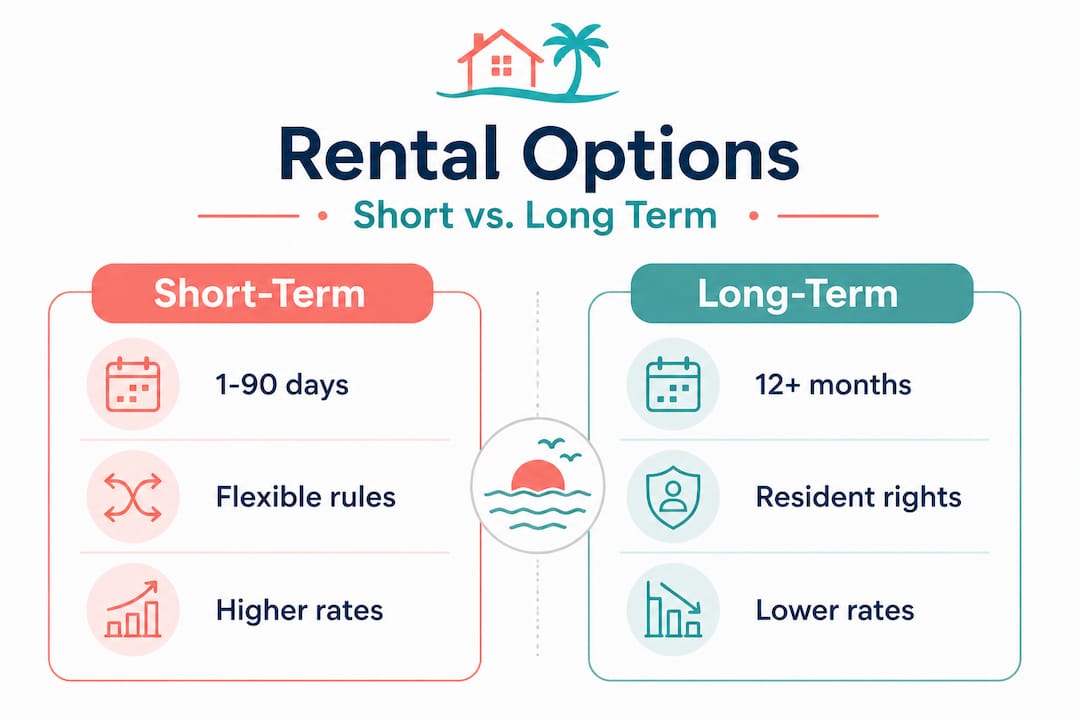
Long-term leases (over 12 months) give you stability and are governed by Spain’s Urban Leasing Law (LAU). They are generally more accessible for EU nationals and residents, but non-EU citizens face stricter requirements tied to valid visas or residency permits. Without proper documentation, landlords are legally reluctant to sign long contracts with foreign nationals who lack a Spanish residency status.
Understanding the advantages of Spanish real estate helps you weigh whether renting long-term or locking in a seasonal villa is the smarter move for your lifestyle and timeline.
Popular luxury property types for foreign renters in Costa Dorada:
- Detached villas with private pools and sea views in Cambrils and Miami Platja
- Modern seafront apartments in Salou with concierge services
- Semi-detached townhouses in gated communities near golf courses
- Renovated farmhouses (masies) in the Tarragona countryside for longer retreats
- New-build residential apartments with high-spec finishes and communal pools
Here is a quick comparison to help you choose the right rental type:
| Feature | Short-term rental | Long-term lease |
|---|---|---|
| Minimum stay | 1 night to 3 months | Usually 12+ months |
| Licensing needed | Yes (owner must hold license) | No separate license required |
| Visa/residency required | Usually not for short stays | Yes for non-EU nationals |
| Price per month | Higher (flexibility premium) | Lower (stability discount) |
| Contract type | Holiday rental agreement | LAU residential contract |
| Best for | Seasonal visitors, explorers | Expats, relocated professionals |
The market for luxury short-term rentals in Cambrils is competitive and concentrated in properties that already hold valid tourist licenses. Trying to rent an unlicensed property, even if the landlord offers it, carries legal risk for both parties.
Key legal requirements and documentation for foreign renters
With rental options clear, it is vital to understand the paperwork and legal requirements before beginning your search. Missing one document can delay your move-in by weeks or, in some cases, lose you the property entirely.
The most important document you will need is your NIE, which stands for Número de Identidad de Extranjero. This is Spain’s foreigner identification number, and virtually every formal transaction in the country requires one, from signing a rental contract to opening a Spanish bank account. You apply for it at a Spanish consulate in your home country or at a Foreigners’ Office (Oficina de Extranjería) in Spain. Processing times vary, so factor at least four to six weeks into your planning timeline.
Beyond the NIE, landlords and agencies typically ask for the following:
- Valid passport or EU national ID (two copies are standard)
- NIE certificate (original and copy)
- Proof of income: three to six months of bank statements, employment contracts, or pension statements
- Proof of current address: utility bill or bank letter from your home country
- References: previous landlord references or employer letters are increasingly requested for high-end properties
- Spanish bank account details: most landlords require rent payments via Spanish bank transfer
For non-EU citizens, long-term residency requirements add another layer. You may need a valid long-stay visa (Type D) or residency permit before a landlord will consider your application for a 12-month or longer contract.
Steps to verify a property’s legal standing before you sign:
- Request the property’s full address and cadastral reference number
- Ask for the tourist license number if it is a short-term rental (required under Catalan Law 13/2002)
- Cross-check the license with the Catalan Tourist Registry (Registre de Turisme de Catalunya)
- Confirm the rental contract includes key clauses: rent amount, payment terms, deposit amount (capped at two months for residential leases), notice periods, and maintenance responsibilities
- Review property legal requirements specific to Costa Dorada before signing anything
Pro Tip: Start your NIE application at least six to eight weeks before your intended move-in date. Many foreign renters underestimate processing delays and lose their preferred property to someone with paperwork already in hand.
The rental contract itself should always be written in Spanish, with a certified translation if needed. Do not accept a verbal agreement for luxury properties. The deposit, known as fianza, must be formally registered with the regional housing authority, which in Catalonia is the Incasòl agency.
How to find and secure luxury properties in Cambrils
Once you have your paperwork ready, finding and securing the right property is the next big step. The good news is that Cambrils has a well-developed luxury rental market with several reliable channels available to foreign renters.
Where to start your search:
- Specialist real estate agencies: Local agencies with luxury portfolios offer curated listings, verified licenses, and agent support throughout the process. This is the most reliable route for foreign nationals.
- Direct owner listings: Some owners list directly through property portals. These can offer better pricing but require you to do your own due diligence on licensing and contract terms.
- Vetted online platforms: Established platforms with verified listings for renting a villa in Cambrils offer a mix of convenience and accountability, but always confirm the license number independently.
When you find a property that looks right, treat the inspection seriously. Visit in person when possible, or arrange a virtual walkthrough with the agent. Check the following during your visit:
- Condition of fixtures, appliances, air conditioning, and heating systems
- Internet connectivity (essential for remote workers and extended stays)
- Proximity to the beach, restaurants, and transport links
- Parking availability and security systems
- Quality of outdoor spaces, pools, and communal areas
Negotiation tactics that actually work in the luxury market:
- Offer to pay two or three months’ rent in advance in exchange for a small reduction in monthly rate
- Ask for minor furnishing upgrades or appliance replacements before signing
- Request a break clause if committing to 12 months or more
- Ask whether utilities (electricity, water, internet) are included, especially for short stays
- Get everything agreed verbally confirmed in writing before paying any deposit
“Short-term luxury holiday rentals are more accessible via platforms, but must be licensed to protect both the renter and the owner amid Spain’s growing anti-Airbnb enforcement climate.”
Pro Tip: Prioritize properties that display their Catalan tourist license number prominently in listings. If an owner cannot provide it on request, walk away. Unlicensed rentals expose you to eviction risk and potential fines.
Exploring the range of luxury property types available across Costa Dorada helps you benchmark what genuine luxury looks like at different price points. And if lifestyle is a priority, reviewing top luxury amenities available in the region will sharpen your must-have list before negotiations begin.
Working with real estate agents: Local expertise and support
For many foreign renters, local real estate agents bridge gaps and simplify the process to secure your ideal property. The luxury rental market in Cambrils is not fully transparent online, and some of the best properties never appear on public portals. A trusted agent is often the only way to access them.
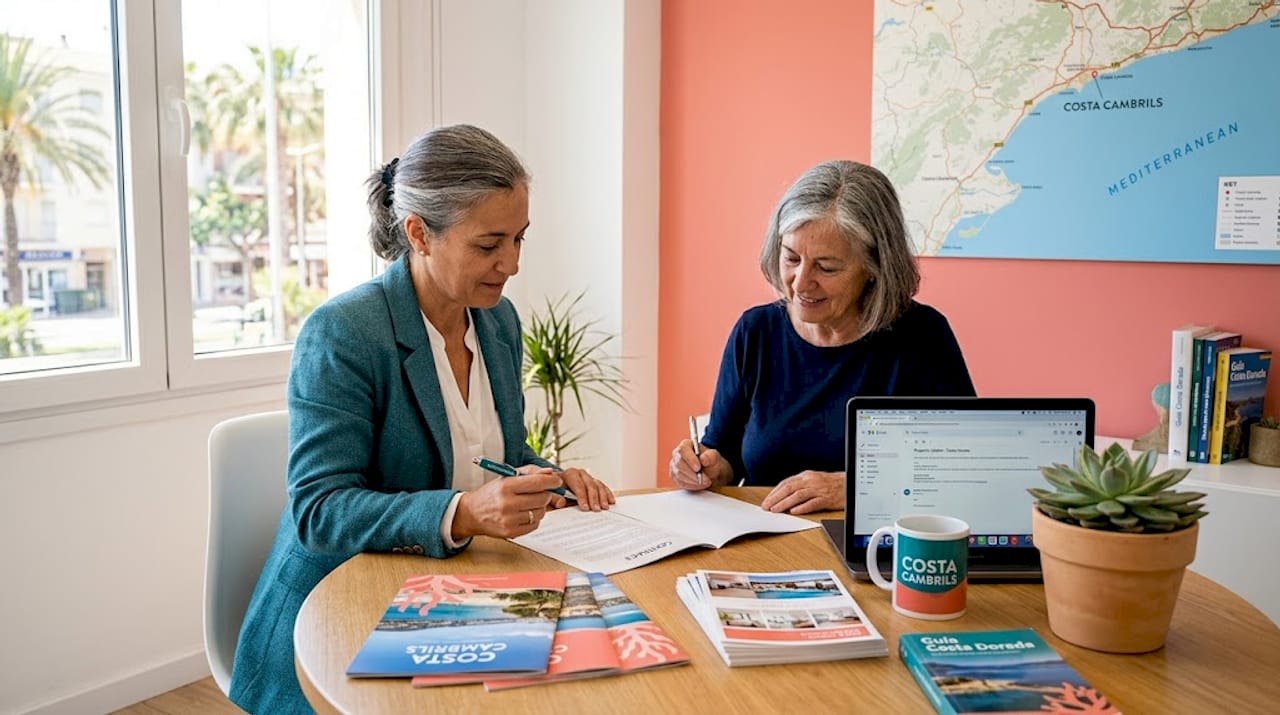
Licensed local agents provide critical expertise and on-the-ground support for foreign nationals navigating what can feel like an opaque system.
How a good agent supports foreign renters:
- Verifies that the property holds valid tourist or residential rental licenses
- Reviews the rental contract and flags non-standard or unfavorable clauses
- Assists with NIE applications and connects you with trusted local lawyers
- Communicates with landlords on your behalf in Spanish, removing language barriers
- Accompanies you to property inspections and helps you ask the right questions
- Advises on fair market pricing to prevent overpaying in a competitive market
Questions to ask a potential agent at your first meeting:
- How many luxury rental transactions have you handled for foreign nationals in the last year?
- Do you have a network of licensed short-term properties in Cambrils?
- Can you provide references from past international clients?
- What is your fee structure, and who pays it: landlord or renter?
- Do you offer post-contract support if issues arise during the tenancy?
Finding the right agent means looking for someone who specializes in international clients and the luxury segment. Generic agencies may not know the specific licensing landscape or the nuances of working with non-EU renters. Explore the network of international real estate agents who operate across Costa Dorada and understand both the local regulations and the needs of foreign renters.
Pro Tip: Choose an agent who is registered with a recognized professional association, such as the Col·legi d’Agents de la Propietat Immobiliària de Tarragona. This gives you formal recourse if something goes wrong.
Agents also serve as your best resource for understanding neighborhood dynamics in Cambrils. The town’s port area, the central old town, and the wider municipal boundary each have different character, pricing levels, and licensing situations. A knowledgeable agent can help you zero in on the right micro-location for your lifestyle and budget.
The insider’s perspective on success in Costa Dorada rentals
The conventional advice for foreign nationals moving to Spain is simple: rent first, then decide whether to buy. It sounds sensible. But for non-EU renters specifically, this advice glosses over some real friction points that can make the “just rent for now” approach more complicated than expected.
The bureaucracy involved in renting legally as a non-EU national is genuinely substantial. Getting your NIE, sourcing a Spanish bank account (which itself often requires a NIE), gathering income documentation from a foreign employer, and finding a landlord willing to accept a short-term visa holder on a 12-month contract: these are not minor inconveniences. They are real barriers that take time, money, and local connections to navigate smoothly.
Anti-Airbnb sentiment in Spain has reshaped the short-term rental landscape dramatically. Municipalities along Costa Dorada have frozen new tourist license issuance in some zones. Properties that were rentable three years ago may no longer be legally rentable today. This means due diligence on licensing is not optional, even for a two-week summer villa.
Unexpected hurdles experienced renters wish they had known:
- Landlords legally cannot discriminate but may simply choose tenants with simpler paperwork situations, meaning EU citizens often get priority
- Deposit disputes are common without a thorough inventory checklist completed at move-in
- Utility connections (especially internet) can take two to four weeks to set up in your name
- Tax obligations as a long-term renter, including Spain’s non-resident income implications, are frequently overlooked
- Seasonal pricing swings in Cambrils are extreme: summer rents can be three to four times winter rates for the same property
What separates a smooth experience from a costly one is almost always preparation and the quality of local support. Renters who engage a good agent early, start paperwork ahead of time, and treat the process like the significant financial transaction it actually is tend to arrive in their luxury villa on schedule. Those who assume it works like renting in London or New York typically hit delays.
If a longer-term future in Costa Dorada appeals to you, it is worth exploring the buying luxury property guide sooner rather than later. Understanding the buying process while renting puts you in a much stronger position if you eventually decide to invest.
Pro Tip: Even for a short two-week stay in a luxury villa, treat your due diligence seriously. Confirm the license, review the contract, and document the property condition on arrival with dated photos. It is a small investment of time that protects a significant financial commitment.
Take your next step towards luxury living in Costa Dorada
You now have the full picture: from choosing between short-term villas and long-term leases, to gathering the right paperwork, to negotiating your contract and working with the right agent. The path to your luxury rental in Cambrils is clear, it just requires the right local guidance and resources at each step.
At Costa Cambrils, we specialize in connecting international renters with premium, fully licensed properties across Costa Dorada. Whether you are searching for a sea-view villa for the season or a high-end apartment for a longer stay, our expert team understands the specific needs of foreign nationals. Explore the full range of luxury amenities in Costa Dorada that come with our featured properties, and browse the complete catalog of available property types in Spain to find exactly what fits your lifestyle and budget. Our team is ready to guide you from first inquiry to signed contract.
Frequently asked questions
What documents do foreigners need to rent luxury property in Spain?
You typically need a passport, NIE, proof of income, and a signed rental contract; non-EU citizens face stricter residency and visa requirements for long-term stays, so start gathering documents early.
Are short-term luxury rentals easier than long-term leases for foreigners?
Yes, short-term rentals generally involve less paperwork and no residency requirement, but licensed short-term properties are essential given Spain’s strict enforcement of tourist rental regulations.
How can I verify a luxury rental is properly licensed?
Ask the owner or agent for the official tourist license registration number and cross-check it with the Catalan Tourist Registry; unlicensed short-term rentals carry real legal risk for renters and landlords alike.
Do I need a real estate agent to rent luxury property in Cambrils?
It is not legally required, but local agents provide expertise on licensing, contracts, and negotiations that is especially valuable for non-EU foreigners navigating Spain’s rental market for the first time.
Recommended
- Guía para alquilar vivienda de lujo en Costa Dorada – Inmobiliaria Costa Cambrils
- How to buy property in Costa Dorada: luxury buyer’s guide – Inmobiliaria Costa Cambrils
- Luxury property buying guide: Costa Dorada’s top real estate – Inmobiliaria Costa Cambrils
- How to buy luxury property in Spain: Costa Dorada guide – Inmobiliaria Costa Cambrils