Yes, decennial insurance is mandatory for almost every new residential building sold in Spain, and it’s the developer, not the buyer, who has to arrange it. The policy guarantees structural repairs for 10 years, and without proof of it, a notary won’t authorize the deed and the Land Registry won’t inscribe the property. If you’re buying new construction, check for this certificate before you sign anything.
TL;DR:
- The decennial insurance must be contracted by the developer before construction begins, with coverage starting early enough to include OCT supervision.
- Confirm the insurance certificate, coverages, and technical reports before signing any agreement or making a deposit, and verify the reception date without reservations.
- The 10-year guarantee is mandatory only if the building is declared within 10 years of the reception, otherwise the obligation ceases.
- The decenal policy primarily protects against structural defects, while shorter guarantees cover finishing, workmanship, and habitability issues.
- Buyers in Costa Dorada should use professional services to verify decenal compliance and ensure the insurance’s coverage start date aligns with construction progress.
Table of Contents
- What Is Seguro Decenal Vivienda Nueva and What Does It Cover?
- When Is It Legally Mandatory? Notary and Registry Rules
- Who Has to Buy It: Promoters vs. the Autopromotor Exception
- Decennial vs. the 3-Year and 1-Year Guarantees
- Why Registration and Financing Depend on This Policy
- What a Decennial Policy Typically Costs
- What to Check Before You Buy a New Home
- How Costa Cambrils Helps Buyers Verify Compliance in Costa Dorada
- Why the Real Risk Isn’t the Insurance, It’s the Timing
- Get Help Verifying a New Build Before You Commit
- Sources
What Is Seguro Decenal Vivienda Nueva and What Does It Cover?
The seguro decenal vivienda nueva is a mandatory 10-year insurance policy tied to a specific Spanish law: article 19 of Ley 38/1999, known as the Ley de Ordenación de la Edificación (LOE). It protects buyers against structural damage that shows up years after a building is finished, which is exactly the kind of defect a buyer has zero ability to spot during a walkthrough.
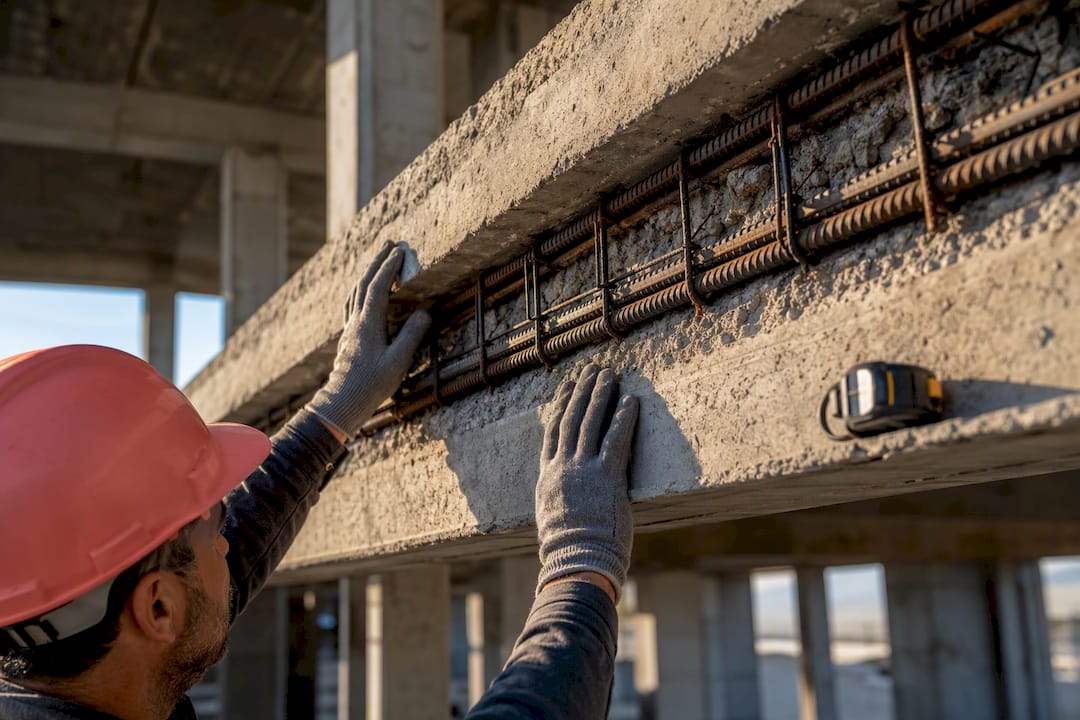
The law defines the covered elements narrowly. It’s about the bones of the building, not the paint job:
- Foundations and load-bearing walls
- Structural beams and columns
- Forjados (the structural floor slabs between stories)
- Any element whose failure compromises the building’s overall resistance or stability
Standard home insurance covers fire, water damage, or theft after you move in. The decenal is different. It sits behind the builder, protecting you from the kind of hidden structural failure that a regular home policy was never designed to touch.
When Is It Legally Mandatory? Notary and Registry Rules
The obligation comes straight from the LOE’s Disposición adicional segunda combined with article 19. Together, they make the decenal a legal condition for declaring and registering new construction, not just a good idea a developer might skip.
Notaries and the Land Registry require documented proof of the guarantee before they will authorize or inscribe a declaration of new work. Without it, a promoter cannot legally market the units or secure mortgage financing for buyers, according to Spanish Solicitors’ analysis of the ten-year insurance requirement.
Timing matters here. The 10-year clock starts when the work is formally received without reservations, or from the date any noted defects (reservations) get fixed. If a building is declared as obra nueva more than 10 years after that reception date, the obligation to carry the insurance disappears, according to Mallorca. That detail catches out buyers of older “new” builds that technically fall outside the window.
Who Has to Buy It: Promoters vs. the Autopromotor Exception
In almost every transaction, the promotor (the developer or company building for sale) contracts and pays for the decenal. It’s baked into the cost of building for the market, not something a buyer negotiates separately.
There’s one real exception, and it’s narrower than most people assume:
- An autopromotor, meaning an individual building a single-family home strictly for their own personal use, is exempt from the requirement.
- That exemption evaporates the moment the owner sells the property within 10 years of completion. At that point, the seller must contract the guarantee for whatever term remains.
- Registrars and the Dirección General de los Registros y del Notariado interpret this exception strictly. Exoneration requires solid proof of actual personal occupation, according to DGRN resolutions on obra nueva requirements.
If you’re buying a self-built house that’s under 10 years old, ask directly whether the seller claimed the autopromotor exemption. If so, confirm they’ve now closed that gap with a retroactive policy.
Decennial vs. the 3-Year and 1-Year Guarantees
The decenal only handles structural failure. Everything else you’d worry about in a new home falls under two shorter, separate guarantees the LOE also requires:
- The one-year guarantee (garantía de un año) covers finishing and workmanship defects, things like cracked tiles, faulty paint, or poorly fitted carpentry.
- The three-year guarantee (garantía trienal) covers habitability issues, mainly problems tied to installations, insulation, and elements that affect livability, such as persistent damp or failing waterproofing.
- The ten-year decenal kicks in only for genuine structural failure, foundation settling, beam failure, or collapse risk, according to Spanish Solicitors.
Confusing these three trips up a lot of buyers. A leaking window frame is a one-year problem. A sinking foundation is a decenal problem. Keep every certificate from all three guarantees in one file. You’ll need whichever one matches the defect when it actually shows up.
Why Registration and Financing Depend on This Policy
The transactional stakes are concrete, not abstract. Without an accredited decenal policy, the Registro de la Propiedad won’t inscribe the new construction, and lenders typically won’t approve a mortgage on an uninscribed property, or they’ll flag the file with cautionary notes that slow or kill the deal, according to Gloval’s analysis of decenal implications.
The upside for buyers: if a promoter goes bankrupt or simply vanishes after handover, the decenal still works. You can claim directly against the insurance company for a covered structural defect, regardless of the developer’s financial state, according to Davisa’s overview of buyer protections under the decenal. That direct line to the insurer is the real value of the policy.
At closing, you should expect to see:
- The insurance certificate naming the insurer and policy number
- The OCT (Organismo de Control Técnico) supervision report
- The libro del edificio (building’s technical logbook)
What a Decennial Policy Typically Costs
Premiums are usually quoted as a percentage of total construction cost rather than a flat euro figure, since the price scales with the size and complexity of the project. Independent appraisal firms report a typical range of roughly 0.55% to 1.5% of construction cost, according to Tinsa’s breakdown of decenal pricing, though the exact figure depends heavily on the project.
What moves the price:
- Building type (a single detached house prices differently than a block of apartments)
- Terrain and soil conditions
- Materials and structural system used
- Whether OCT technical supervision is in place from the start
Pro Tip: Contracting the decenal before construction begins, with OCT oversight running the whole way through, tends to bring the premium down. Insurers price early, supervised projects lower because they can track the build quality directly rather than underwriting blind after the fact.
What to Check Before You Buy a New Home
Run through this before you sign anything, ideally before you even put down a reservation deposit:
- Ask the promotor directly for the insurance certificate, the insurer’s name, and the policy start date.
- Confirm which structural elements the policy names as covered. Wording should track article 19 language, not a vague summary.
- Request the OCT technical report and the libro del edificio.
- Verify at the notary that the decenal was actually presented as part of the obra nueva declaration.
- Ask when the reception of the work occurred without reservations, since that date starts the 10-year clock.
Costa Cambrils’s own checklist for buying obra nueva in Costa Dorada walks through this same sequence with local examples, and it’s worth reading alongside this list if you’re actively shopping.
How Costa Cambrils Helps Buyers Verify Compliance in Costa Dorada
Buyers in the Cambrils and Costa Dorada area can find services that review new-build documentation before money changes hands, checking that the decenal certificate, OCT reports, and building logbook line up with what the LOE actually requires. These services may include referrals to legal advisors familiar with the legal requirements for buying property in Costa Dorada, so buyers aren’t reading Spanish insurance paperwork alone.
Because the team tracks new developments across the region day to day, spotting a promoter who’s cut corners on OCT supervision or delayed contracting the decenal takes less digging than it would for an outside buyer starting from zero.
Why the Real Risk Isn’t the Insurance, It’s the Timing
Most guidance on this topic treats the decenal as a box to check at closing. That’s backwards. The policy itself is standardized by law, article 19 doesn’t leave much room for variation, so the real risk isn’t whether coverage exists. It’s whether it started on the right date, and whether the promoter contracted it early enough for OCT supervision to actually mean something.
A decenal bought after the concrete is poured, with no technical oversight during the build, is legally valid but practically weaker. The insurer has less data to stand behind if a claim comes in. Buyers fixate on the certificate’s existence and skip the question that actually protects them: when did coverage begin relative to construction, and who was watching the build while it happened?
If you take one thing from this: don’t just ask “is there a decenal?” Ask when it started, who supervised the build, and whether the reception date without reservations has been documented. That’s the difference between a policy that’s a formality and one that will actually pay out.
— Oscar
Get Help Verifying a New Build Before You Commit
There are services that review decenal certificates, OCT reports, and building logbooks for buyers considering new construction in Cambrils and across Costa Dorada, and connect clients with legal advisors who know the regional registry practice firsthand. That’s a practical alternative to sorting through Spanish insurance and registry paperwork on your own from abroad.

If you’re evaluating a specific new-build listing, start with the Checklist for Buying New Homes 2026 for a full document-by-document walkthrough, then reach out to request a review of the decenal paperwork on any property you’re considering before you put down a deposit.
This article is general information, not a substitute for advice from a qualified lawyer. Consult a qualified legal professional about your own circumstances before acting on anything here.
Sources
- Tinsa: Seguro decenal — what it costs and when it’s required
- Constructors liability and decennial insurance in Spain — TurnerInsurance
- Ten years insurance (seguro decenal) — Spanish Solicitors
- Davisa: Seguro decenal — buyer protection and insurer recourse