TL;DR:
- Digital marketing has become essential for real estate professionals to connect with buyers, generate leads, and close sales efficiently. Strategies like video content, hyperlocal SEO, and automation significantly increase inquiries and reduce time-to-sale. A coordinated, authentic, and data-driven approach across multiple channels ensures sustained success in the competitive market of 2026.
Digital marketing is the primary channel through which real estate professionals connect with qualified buyers, generate leads, and close property transactions at scale. The role of digital marketing in real estate has shifted from optional supplement to operational necessity. Agents and investors who treat SEO, video content, social media, and AI-driven automation as core business functions consistently outperform those still relying on print ads and cold calls. Costacambrils operates in this reality every day, competing for international buyers across the Costa Dorada who begin their property search on Google, Instagram, and YouTube before ever speaking to an agent.
How digital marketing transforms property visibility and buyer engagement
97% of home buyers start their property search online. That single figure reframes every marketing budget decision a real estate professional makes. If your listings are not visible on search engines and social platforms, you are invisible to nearly your entire potential market.

Mobile devices now dominate property searches, which means listings must load fast, display clean photography, and offer interactive features on a small screen. Buyers scroll Instagram and TikTok the same way they browse property portals, and the content that stops them mid-scroll is video. Social media videos receive 1,200% more shares than text and static images combined. That reach multiplier is why short-form video has become the single most cost-effective distribution tool for property listings.
The numbers behind video tours are equally striking. Listings with video tours receive 403% more inquiries than listings without them. Virtual staging, which digitally furnishes empty rooms, increases buyer interest by 40%. Modern virtual tours go further, incorporating AR-enabled measurements and paint-color simulations that let tech-savvy buyers mentally move in before scheduling a physical visit. Virtual tours boost listing engagement by 87% and reduce time-to-sale by 20%.
Local SEO compounds these gains. The specific tactics that matter most include:
- Neighborhood guide pages: These rank 28% higher than generic service pages and generate 3.2x more leads. A page titled “Luxury villas for sale in Cambrils” outperforms a generic “Properties in Spain” page every time.
- Google Business Profile optimization: Completing every field, posting weekly updates, and collecting reviews directly improves local pack rankings.
- Hyperlocal blog content: Posts covering school districts, transport links, and lifestyle amenities attract buyers researching specific neighborhoods rather than broad regions.
Real estate marketing has shifted from location-centric to digital-attention dominance. Owning the search results for a specific neighborhood is now as valuable as owning a prime office location once was.
What is the ROI of digital marketing for real estate?
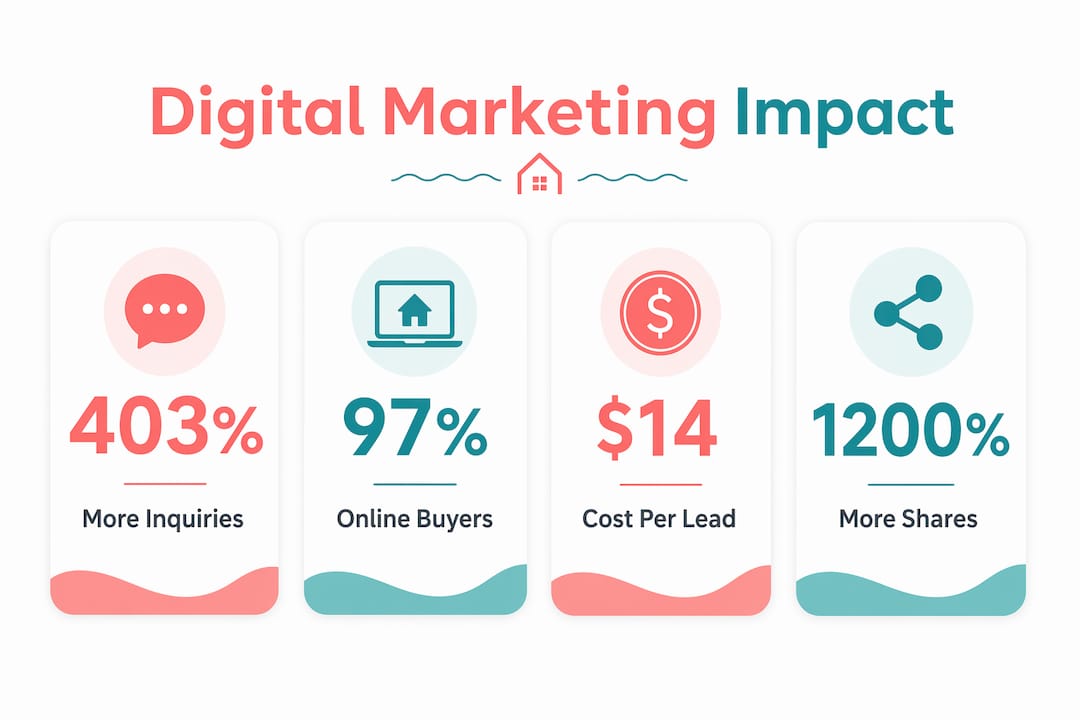
Cost efficiency separates digital marketing from traditional advertising in ways that matter directly to your bottom line. SEO leads average $14 per lead compared to $42 for Google Ads leads. That 3x cost difference compounds over time because SEO builds a durable digital asset. A well-optimized neighborhood guide page generates leads for years without additional spend.
| Channel | Cost per lead | Key advantage |
|---|---|---|
| Organic SEO | $14 | Long-term asset, compounds over time |
| Google Ads (PPC) | $42 | Immediate visibility, precise targeting |
| Email marketing | Near zero per send | $36 return per $1 spent with personalization |
| Combined SEO + Paid | Higher upfront | 3.1x ROI with sustained growth |
Email marketing deserves particular attention because most real estate professionals underinvest in it. Personalized email campaigns yield 6x higher transaction rates than generic broadcast emails. A buyer who downloaded a neighborhood guide six months ago and received a tailored drip sequence is far more likely to convert than a cold prospect. SEO accounts for 53% of real estate website traffic, and organic visitors convert at higher rates than paid traffic, making it the highest-leverage long-term investment in your digital presence.
Pro Tip: Run paid Google Ads on your highest-intent keywords while your SEO content matures. The paid campaigns capture immediate demand; the organic content builds the asset. After 12 months, reduce ad spend on terms where you rank organically and reallocate that budget to new keyword targets.
Data-driven analytics make budget allocation precise rather than intuitive. Platforms like Google Analytics 4 and HubSpot show you exactly which blog posts generate inquiry forms, which email subject lines drive opens, and which ad creatives produce qualified leads. That visibility eliminates guesswork and lets you scale what works.
How does AI and automation accelerate real estate marketing?
Speed of response is the most underrated variable in real estate lead conversion. Responding to leads within 5 minutes makes a prospect 100 times more likely to qualify than responding after 30 minutes. Most agents respond in hours. That gap is where deals are lost.
AI-powered tools close that gap automatically. The practical applications that deliver the most measurable impact include:
- AI chatbots on listing pages: These qualify buyers by asking budget, timeline, and location preference questions in real time, filtering serious prospects from casual browsers. Agents using chatbots report saving up to 15 hours per week on initial qualification calls.
- Predictive analytics platforms: Tools like Salesforce Einstein and HubSpot’s AI features analyze browsing behavior, email engagement, and search patterns to identify which leads are most likely to close. This lets agents prioritize their follow-up rather than treating every inquiry equally.
- Automated drip campaigns: Real estate sale cycles run 3 to 18 months. A CRM-driven drip sequence keeps your brand present throughout that cycle without requiring manual effort. The sequence delivers neighborhood updates, market reports, and new listing alerts based on the buyer’s stated preferences.
Pro Tip: Set up a CRM workflow that triggers an automatic text message and email within 90 seconds of a new inquiry. Use tools like Follow Up Boss or kvCORE to build this. The message should be personal in tone, reference the specific property the lead inquired about, and offer two specific time slots for a call.
Automation tools that ensure quick lead contact dramatically improve conversion rates across the board. The agents who win in 2026 are not necessarily the most charismatic. They are the most systematized.
Best digital marketing practices for real estate professionals in 2026
Building a multi-channel digital marketing strategy requires sequencing your efforts correctly. Spreading budget across every platform simultaneously produces mediocre results everywhere. Instead, build depth on two or three channels before expanding.
Produce 60-second video tours for every listing. Film with a smartphone in landscape mode, walk through each room with narration, and end with a neighborhood shot. Upload natively to Instagram Reels, TikTok, and YouTube Shorts. These platforms favor native uploads over shared links, which means broader organic reach at zero additional cost.
Optimize your Google Business Profile completely. Add every service category, upload 20 or more photos, post weekly updates, and respond to every review within 24 hours. Buyers researching agents in a specific area will see your profile before they see your website.
Publish neighborhood-specific blog content monthly. Cover topics like local market trends, new restaurant openings, school ratings, and transport improvements. This content attracts buyers in the research phase and positions you as the area expert before they are ready to contact an agent.
Collect and publish client testimonials systematically. User-generated content receives 4.5x more engagement than branded content. A 60-second video of a happy buyer walking through their new home outperforms any professionally produced brand video. Ask every client for a video testimonial at closing.
Run retargeting ads on Facebook and Google. A buyer who visited your listing page but did not inquire is a warm prospect. Retargeting ads show them that listing again as they browse other sites, keeping your property top of mind. Retargeting campaigns consistently deliver lower cost-per-conversion than cold audience campaigns.
Top firms use omnichannel strategies that align marketing with the nonlinear buyer journey, maintaining brand consistency across every digital touchpoint from first Google search to signed contract. For international buyers in Spain, that consistency across languages and platforms is especially decisive.
Key takeaways
Digital marketing in real estate works because it places the right property in front of the right buyer at the right moment through measurable, scalable channels.
| Point | Details |
|---|---|
| Video content drives inquiries | Listings with video tours receive 403% more inquiries than those without. |
| SEO delivers the lowest cost per lead | Organic SEO leads average $14 versus $42 for paid search leads. |
| Speed of response determines conversion | Responding within 5 minutes makes a lead 100x more likely to qualify. |
| Neighborhood content outperforms generic pages | Hyperlocal pages rank 28% higher and generate 3.2x more leads. |
| Personalized email multiplies transactions | Automated, personalized email campaigns yield 6x higher transaction rates. |
What I have learned about digital marketing and real estate after years in this market
The most common mistake I see real estate professionals make is treating digital marketing as a single channel rather than a coordinated system. They run Facebook ads for three months, see inconsistent results, and conclude that social media does not work for their market. What actually failed was the coordination. The ads drove traffic to a website with no neighborhood content, no chatbot, and no follow-up sequence. The lead arrived and found nothing to hold their attention.
Real estate marketing is a coordination problem. Demand capture (paid ads, SEO) and demand creation (video content, social media) serve different stages of the buyer journey. Running only one without the other wastes budget. The buyers who see your retargeting ad need to have encountered your brand organically first. The buyers who find your neighborhood blog post need a clear path to a listing or a contact form.
The other thing I have learned is that authenticity in video consistently outperforms production value. A raw 90-second walkthrough of a Cambrils neighborhood at sunset, filmed on an iPhone with honest narration, generates more inquiries than a polished drone reel with a music bed. Buyers are not looking for a commercial. They are looking for a person they can trust with one of the largest financial decisions of their life. Show them the real place and the real you.
Agility matters more than perfection. Track your metrics weekly, not monthly. If a neighborhood guide post is generating traffic but no inquiries, add a lead magnet. If a video ad is generating clicks but no form fills, test a different landing page. The professionals who win in 2026 are those who treat their digital marketing as a living system, not a quarterly campaign.
— Oscar
Discover luxury property marketing with Costacambrils
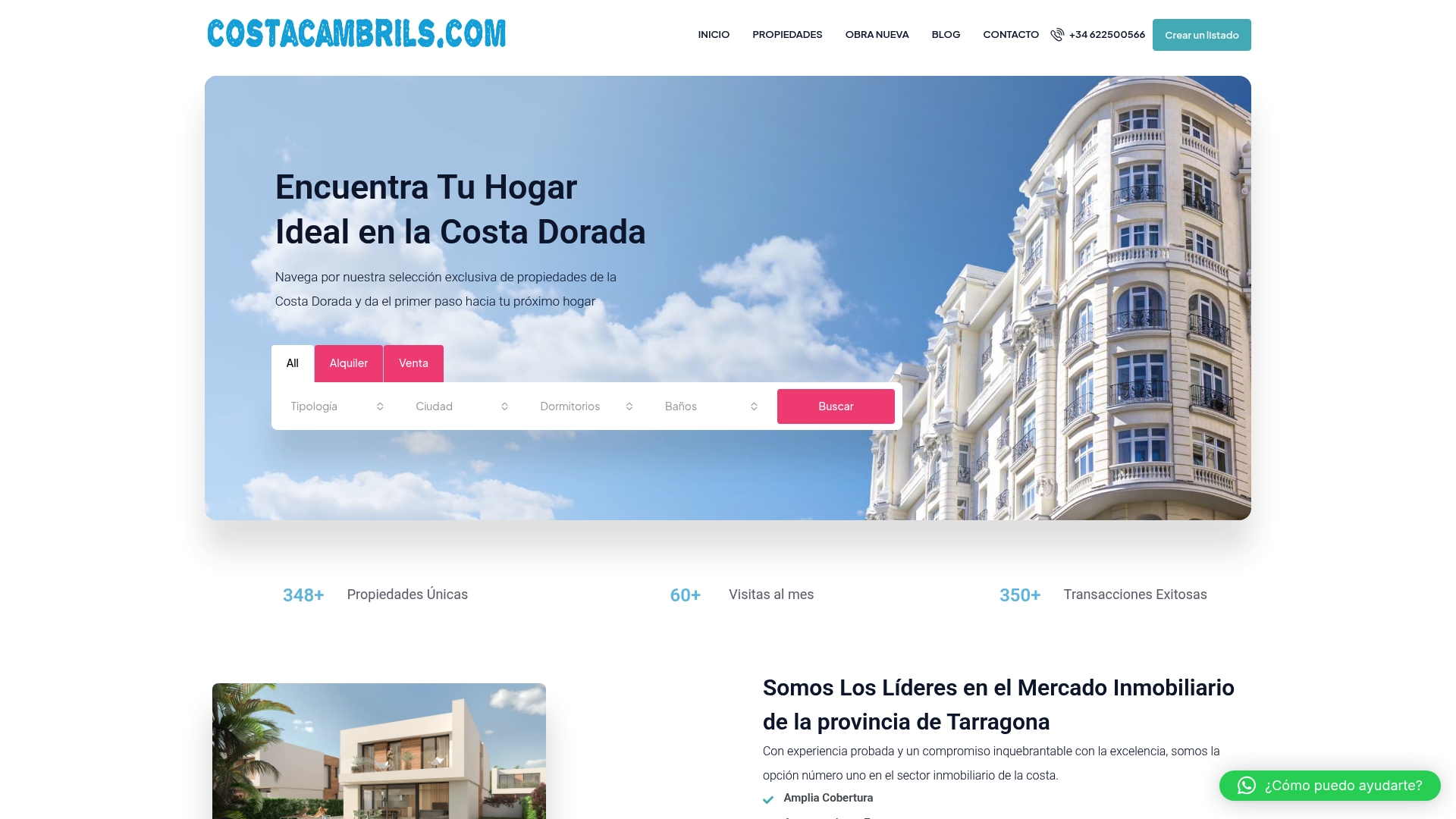
Costacambrils specializes in luxury property sales and rentals across the Costa Dorada, with deep expertise in reaching both national and international buyers through targeted digital marketing. The platform combines professional virtual tours, SEO-optimized listings, and a curated selection of villas, apartments, and new developments in Cambrils and surrounding areas. If you are an investor or buyer looking for luxury real estate in Cambrils, Costacambrils provides the digital infrastructure and market knowledge to match you with the right property efficiently. Explore the full portfolio and connect with the expert team to see how a digitally led approach translates directly into faster, smarter property decisions on the Costa Dorada. You can also review luxury marketing tips tailored specifically to buyers in this market.
FAQ
What is the role of digital marketing in real estate?
Digital marketing connects real estate agents and investors with qualified buyers through SEO, video content, social media, email, and paid advertising. It drives property visibility, lead generation, and faster sales at measurable cost.
How does digital marketing affect real estate sales?
Listings with video tours receive 403% more inquiries, and SEO-driven leads convert at higher rates than paid traffic. Faster lead response enabled by automation tools directly increases the number of deals that close.
Why is social media important for real estate marketing?
Social media videos receive 1,200% more shares than text and image content, giving property listings exponential organic reach. Platforms like Instagram and TikTok allow agents to reach international buyers who are actively researching locations before contacting an agent.
What digital marketing strategies work best for real estate in 2026?
Neighborhood-specific SEO content, short-form video tours, Google Business Profile optimization, personalized email drip campaigns, and retargeting ads consistently deliver the highest ROI for real estate professionals in 2026.
How much does digital marketing cost for real estate agents?
SEO leads average $14 per lead compared to $42 for Google Ads, and email marketing returns $36 for every $1 spent with personalization. The most cost-efficient strategy combines organic SEO with targeted paid campaigns on high-intent keywords.