TL;DR:
- Renting beachfront homes requires detailed location research, focusing on micro-location and neighborhood character.
- Booking well in advance and during shoulder seasons can significantly reduce rental costs and improve availability.
Renting a beachfront home is one of those experiences that sounds straightforward until you’re three days from arrival and discovering the listing photos were taken with a very forgiving camera angle. The best tips for renting beachfront homes go well beyond “book early and read reviews.” They cover how to vet a location properly, which amenities actually matter versus which ones sound good in a brochure, how to protect your deposit on day one, and how to pay significantly less than the person who booked the same week last year. This guide covers all of it.
Table of Contents
- Key takeaways
- 1. Essential tips for renting beachfront homes: start with location
- 2. Know which amenities are worth paying for
- 3. Time your booking to save real money
- 4. What to do the moment you arrive
- 5. Comparing your options: a decision-making framework
- My honest take on renting beachfront homes
- Rent smarter in Cambrils with Costacambrils
- FAQ
Key takeaways
| Point | Details |
|---|---|
| Book during shoulder season | Shifting your travel dates to April-May or September-October can cut rental costs by up to 40%. |
| Document everything on arrival | Take timestamped photos of any pre-existing damage within the first 30 minutes to protect your deposit. |
| Test all systems immediately | Check Wi-Fi, HVAC, hot water, and locks on arrival so issues get resolved before they ruin your stay. |
| Vet host responsiveness early | A host who is slow to answer pre-booking questions will be even slower when something breaks at 10 p.m. |
| Match location to your priorities | Proximity, privacy, noise, and neighborhood character vary block by block along any coastline. |
1. Essential tips for renting beachfront homes: start with location
The biggest mistake families make when choosing a beachfront rental is treating “oceanfront” as a single category. It is not. A property on a quiet residential stretch behaves completely differently from one near a boardwalk, a marina, or a stretch of public beach access.
Before you look at a single photo, decide what your priorities actually are:
- Privacy vs. activity. Isolated properties give you quiet mornings and private sunsets. Properties near public access points give your kids easy beach-hopping and nearby food.
- Local infrastructure. How far is the nearest grocery store, urgent care clinic, and pharmacy? For families with young children or older adults, this matters more than the view.
- Seasonal weather patterns. Coastal properties in hurricane-prone regions carry real risk. Hurricane watches are issued just 36 to 48 hours before impact, which gives you very little time to make decisions.
- Micro-location character. Tenant expectations vary significantly by neighborhood, even within the same coastal town. The tone, noise level, and property upkeep differ street by street.
Pro Tip: Search Google Street View for the property address and walk virtually down the street in both directions. This reveals parking situations, neighboring businesses, and the actual beach access point that listing photos never show.
2. Know which amenities are worth paying for
Not every amenity listed in a rental description adds equal value. Some are genuine quality-of-life upgrades. Others are filler that looks good on paper.
The non-negotiables for beachfront rentals are air conditioning (coastal humidity is brutal without it), reliable Wi-Fi if you have remote workers or teens in the group, direct or very close beach access, and adequate outdoor space. An ocean view from a cramped balcony with two plastic chairs is not outdoor space.
For safety specifically, locate smoke and CO detectors and fire extinguishers immediately upon arrival. Identify two exit routes from every floor. These are infrastructure items, not luxuries, and a rental that cannot confirm they exist before you book is a rental to skip.
When you get to the luxury tier, the amenities that actually change your experience are concierge-style local support, outdoor showers with hot water, dedicated beach gear (chairs, umbrellas, boards), and housekeeping during the stay rather than just before and after. You can explore what coastal home features actually signal quality in a beachfront property to sharpen your checklist further.
Pro Tip: Ask the host specifically what beach gear is included. “Fully equipped” in many listings means two folding chairs. If the listing says nothing, assume nothing is provided.
Studies show that 69% of guest satisfaction is linked directly to host availability and clarity. A property with average amenities but a responsive, organized host beats a luxury listing managed by someone who takes 24 hours to return a message.
3. Time your booking to save real money
The beachfront rental market rewards people who plan ahead and punishes last-minute bookers. There are two levers you can pull to reduce costs significantly.
First, book 6 to 12 months in advance for popular beachfront locations. The best properties at desirable coastal spots go quickly, and locking in early also gives you the most negotiating room on terms.
Second, consider shoulder season travel. Booking in April-May or September-October can reduce accommodation costs by up to 40% compared to peak summer rates. The water is still warm, the beach is less crowded, and you are not paying a premium to share the coastline with half the country.
On cost structure, here are the specific expenses worth negotiating before you sign anything:
- Security deposit amount. Many owners will reduce this for guests with a verifiable rental history.
- Housekeeping fees. These are often added as fixed charges, but the timing and frequency can sometimes be adjusted.
- Minimum stay requirements. Owners in shoulder season are often flexible about shortening mandatory minimums.
- Platform fees. Booking directly with an owner or property manager cuts out intermediary fees, which can range from 10% to 15% of the total rental cost.
- Pet fees. If the property allows pets, this charge is almost always negotiable for a single, well-behaved animal.
Pro Tip: When booking directly with an owner, ask if they offer a loyalty discount for returning guests or a referral credit if you send a friend. Most are happy to offer something to secure repeat business.
Travel insurance deserves a separate mention. In coastal regions prone to weather disruptions, many rental policies exclude refunds for voluntary evacuations or what they categorize as “fear of weather.” A proper travel insurance policy closes that gap.
4. What to do the moment you arrive
Your first 30 minutes in any beachfront rental should follow a specific routine. This is not about being anxious. It is about catching problems while you still have time to address them during normal business hours.
Run through this checklist immediately:
- Test the Wi-Fi on all your devices, not just one. Confirm the speed is usable if anyone is working remotely.
- Check the HVAC and hot water. Turn on the air conditioning and run the hot water in the master shower. These take time to reveal problems.
- Test all locks on exterior doors and windows, especially ground-floor ones in beachfront properties where moisture can cause swelling or salt damage.
- Check all appliances you plan to use: oven, refrigerator, dishwasher, washer/dryer.
- Locate safety equipment. Fire extinguishers, smoke detectors, and CO detectors should all be present and functional.
A systems check within the first 30 minutes prevents the classic scenario where you discover the air conditioning does not work on the hottest day of the week, having waited two days to turn it on.
After the functional check, do a walkthrough specifically for pre-existing damage. Scuff marks, broken fixtures, stained upholstery, cracked tiles. Timestamped photos of every issue create an indisputable record that protects your security deposit from charges that were not your fault.
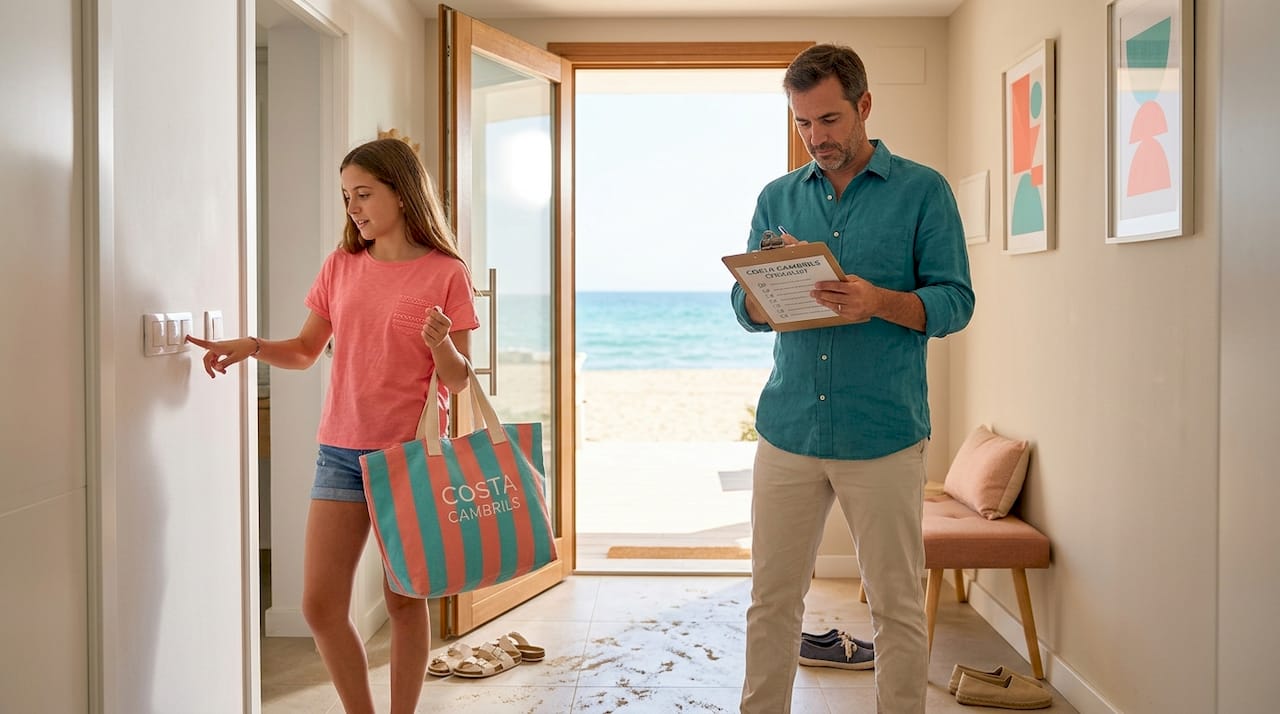
Pro Tip: Send the photo documentation to the host via the booking platform’s messaging system within the first hour. This creates a time-stamped record in the official communication thread, not just on your phone.
Also identify your emergency contacts. Get the local non-emergency police line, the nearest hospital address, and the host’s direct phone number saved before you need them.
5. Comparing your options: a decision-making framework
Once you have two or three properties shortlisted, the comparison gets harder because every listing is presented to look as good as possible. This table gives you a structured way to evaluate what actually matters.
| Factor | What to prioritize | Red flags |
|---|---|---|
| Location | Confirmed beach access, walkable infrastructure, verified neighborhood character | Vague address or “near the beach” without distance specified |
| Amenities | AC, functional kitchen, confirmed safety equipment, adequate sleeping capacity | Amenity lists with no photos, unverified claims |
| Pricing | Total cost including all fees, travel insurance included | Hidden fees revealed only at checkout, non-refundable deposits with no explanation |
| Host communication | Fast pre-booking responses, clear house rules, local emergency info provided | Slow replies, defensive tone, refusal to answer direct safety questions |
| Reviews | Recent reviews mentioning cleanliness, accuracy, and maintenance responsiveness | Generic praise only, no reviews in the last 12 months, reviews mentioning the same issues repeatedly |
Hosts who are vague or unresponsive about safety features and emergency contacts are a consistent red flag across the industry. Transparent, detailed communication before booking strongly predicts how a host behaves when something goes wrong during your stay.
For families with young children, prioritize properties with fenced beach access, pool safety measures, and hosts who are familiar with local tides and currents. For larger groups, parking capacity and sleeping layout matter as much as the total bedroom count. And for those looking at luxury amenity standards in premium coastal markets, the bar for what “included” means is significantly higher than in standard rentals.
My honest take on renting beachfront homes
I’ve made most of the mistakes covered in this article firsthand. The one I see repeated most often with smart, prepared renters is skipping the arrival systems check. You arrive tired, the kids want to get to the water, and the last thing you want to do is run a maintenance audit. But I’ve had stays nearly wrecked by a broken HVAC unit discovered on day three of a seven-day rental. Testing everything in the first 30 minutes costs you 20 minutes. Discovering a problem on day three costs you days.
The other thing I’ve genuinely changed my mind about is the value of micro-location research. I used to think “beachfront is beachfront.” It is not. A property two blocks from a beach bar on a Friday night in July is a completely different experience from a quieter stretch half a mile down. That distinction does not show up in listing descriptions, but it absolutely shows up in your experience.
Direct booking has also consistently gotten me better deals and better service. When you book through an owner directly, you are not a transaction. You are a guest. That changes the relationship in ways that matter when something needs fixing quickly.
— Oscar
Rent smarter in Cambrils with Costacambrils
If you are seriously considering a beachfront rental on Spain’s Costa Dorada, Costacambrils offers something most generic platforms cannot: genuine local expertise combined with a curated selection of luxury coastal properties in Cambrils and surrounding areas. The team works directly with renters and buyers to match them with properties that fit real priorities, not just search filters.
Whether you want a first-line property with private beach access, a family villa with full amenities, or you are evaluating the market before making a longer-term investment, their rental advisory service in Cambrils gives you a credible local guide through the process. For those interested in the full luxury real estate picture on the Costa Dorada, the luxury real estate services overview at Costacambrils is worth reading before you commit to anything.
FAQ
How far in advance should I book a beachfront rental?
For popular coastal destinations, booking 6 to 12 months ahead gives you the best selection and the most room to negotiate terms. Last-minute beachfront availability is limited and expensive.
What is the best time of year for affordable beachfront homes?
Shoulder seasons, specifically April to May and September to October, can reduce rental costs by up to 40% compared to peak summer weeks, with only a modest tradeoff in weather certainty.
What safety features should I check on arrival?
Locate smoke detectors, CO detectors, and fire extinguishers immediately, and confirm at least two exit routes from each floor. Report any missing or malfunctioning equipment to the host before you settle in.
How do I protect my security deposit?
Document all pre-existing damage with timestamped photos or video within the first 30 minutes of arrival, then send the documentation to the host through the booking platform’s official messaging system.
Is travel insurance worth it for beachfront rentals?
Yes, especially in hurricane-prone coastal areas. Many rental contracts exclude refunds for weather-related cancellations or voluntary evacuations, so travel insurance is the only reliable protection against those losses.
Recommended
- Step-by-step rental process for luxury properties in Cambrils – Inmobiliaria Costa Cambrils
- Guía para alquilar casa en Costa Dorada: claves y pasos prácticos – Inmobiliaria Costa Cambrils
- Your guide to renting luxury property as a foreigner in Costa Dorada – Inmobiliaria Costa Cambrils
- Guía para alquilar vivienda de lujo en Costa Dorada – Inmobiliaria Costa Cambrils