
TL;DR:
- Off-plan property is purchased before construction is complete, often providing prices 10-30% below market value. Buyers benefit from staged payments, customizations, warranties, and long-term capital growth, but face risks like developer insolvency and market fluctuations. Careful due diligence with legal protection and patience is essential for successful off-plan investing.
Off-plan property is defined as real estate purchased before construction is complete, based on architectural plans, renderings, and developer specifications. Buyers who commit early typically secure prices 10–30% below expected market value at completion, making this one of the few legal ways to build equity before you ever hold a key. The purchase process runs 12–36 months from reservation to final settlement, with staged payments that reduce the upfront cash burden compared to buying a finished home. Modern new-builds also meet current energy standards, typically achieving EPC ratings of A or B, which translates directly to lower utility bills and a more comfortable home from day one.
Why consider off-plan properties for financial gain?
The financial case for off-plan buying starts with price. Developers discount early units to secure financing for construction, which means buyers who commit before groundbreaking often pay significantly less than the completed property will fetch on the open market. In stable markets, that gap closes during the build period, creating capital growth without the buyer lifting a finger.
The key financial advantages include:
- Below-market entry price. Off-plan units often sell 10–30% below the projected completion value, giving buyers an immediate paper gain.
- Staged payment structure. Flexible payment plans reduce initial cash outlay. A typical schedule requires a 1–5% reservation fee, a 5–20% exchange deposit, and the balance only on completion.
- Capital appreciation during construction. In growing markets, property values rise while the building goes up. Buyers lock in today’s price and collect tomorrow’s value.
- Potential tax advantages. Depending on the jurisdiction, buyers may access stamp duty concessions, first-home grants, or VAT reductions on new-build purchases. These vary by country and region, so local legal advice is necessary.
Pro Tip: Before committing, check the local price growth trend over the previous three to five years. Off-plan investing rewards patience in markets with consistent demand. Flat or declining markets remove the appreciation benefit entirely.
Investors focused on property investment tips for 2026 consistently highlight locking in pre-construction prices as one of the strongest risk-adjusted moves available in the current market.
How do off-plan properties offer practical and lifestyle advantages?
Beyond the numbers, off-plan purchases give buyers a level of control that resale homes simply cannot match. When you buy before construction begins, you often choose your floor plan, finishes, kitchen layout, and fixture styles. That customization is standard practice with most developers and costs nothing extra at the reservation stage.

New-builds also meet current building and environmental regulations. Modern off-plan projects typically include triple glazing, smart home technology, and superior insulation, all of which reduce energy costs and improve daily comfort. Older resale homes rarely match these specifications without expensive retrofitting.
The warranty protection on new-builds is another underappreciated advantage. The NHBC Buildmark warranty covers new-build owners for 10 years: the first two years fall under direct builder responsibility for defects, and the remaining eight years provide structural insurance coverage. Many buyers overlook this protection entirely, yet it eliminates most of the repair costs that plague resale property owners in the early years of ownership.
Practical lifestyle benefits at a glance:
- Move-in ready condition. No renovation backlog, no hidden damp, no aging systems to replace immediately.
- Predictable specifications. Standardized floor plans and finishes reduce the condition surprises common in older homes, which is especially valuable for international buyers purchasing remotely.
- Lower maintenance costs. New materials and systems carry manufacturer warranties and require minimal upkeep in the first decade.
Pro Tip: Ask the developer for the specific EPC rating projected for your unit, not just the development average. A corner apartment with more external walls may perform differently than an interior unit.
What risks and challenges should buyers consider when purchasing off-plan?
Off-plan buying carries real risks, and buyers who ignore them pay for it. The most serious is developer insolvency. If the developer fails mid-construction, your deposit is at risk unless it sits in a protected account. Deposits must be held in independent escrow or a solicitor-run trust account. Never allow your funds to sit in the developer’s operating account.
The main risks buyers face:
- Developer failure or delay. Construction timelines slip for many reasons. A developer who runs out of funding may halt the project entirely, leaving buyers in legal limbo for months or years.
- Market value fluctuation. Property markets move in both directions. If values fall between contract signing and completion, you may complete on a property worth less than you paid.
- Developer-favorable contracts. Off-plan contracts typically favor developers, with clauses permitting specification changes, timeline extensions, and sunset clauses that can cancel the contract under certain conditions.
- Mortgage financing risk. Securing a mortgage for off-plan is complex. Lenders often only issue formal offers close to completion, meaning your financial eligibility must remain strong for the entire build period.
- Specification changes. Developers sometimes substitute materials or alter layouts after contracts are signed. Without protective clauses, buyers have limited recourse.
The single most important step before signing any off-plan contract is engaging a solicitor who specializes in off-plan transactions. Generic conveyancers miss developer-specific clauses that can cost buyers tens of thousands of dollars at completion.
Pro Tip: Request a copy of the contract at least two weeks before your reservation deadline. A specialist solicitor reviewing legal aspects of the purchase needs adequate time to flag problematic clauses and negotiate amendments.
How does the off-plan purchase process work from reservation to settlement?
The off-plan purchase process follows a predictable sequence, though the exact timeline varies by project scale and location. Understanding each phase prevents costly surprises.
| Phase | Typical Timing | Payment Required |
|---|---|---|
| Reservation | Day 1 | 1–5% reservation fee |
| Contract exchange | 2–6 weeks after reservation | 5–20% exchange deposit |
| Construction milestones | Months 3–30 (varies) | Staged payments (project-dependent) |
| Occupation certification | Month 12–36 | Final balance due |
| Legal completion | Within days of certification | Transfer of title |
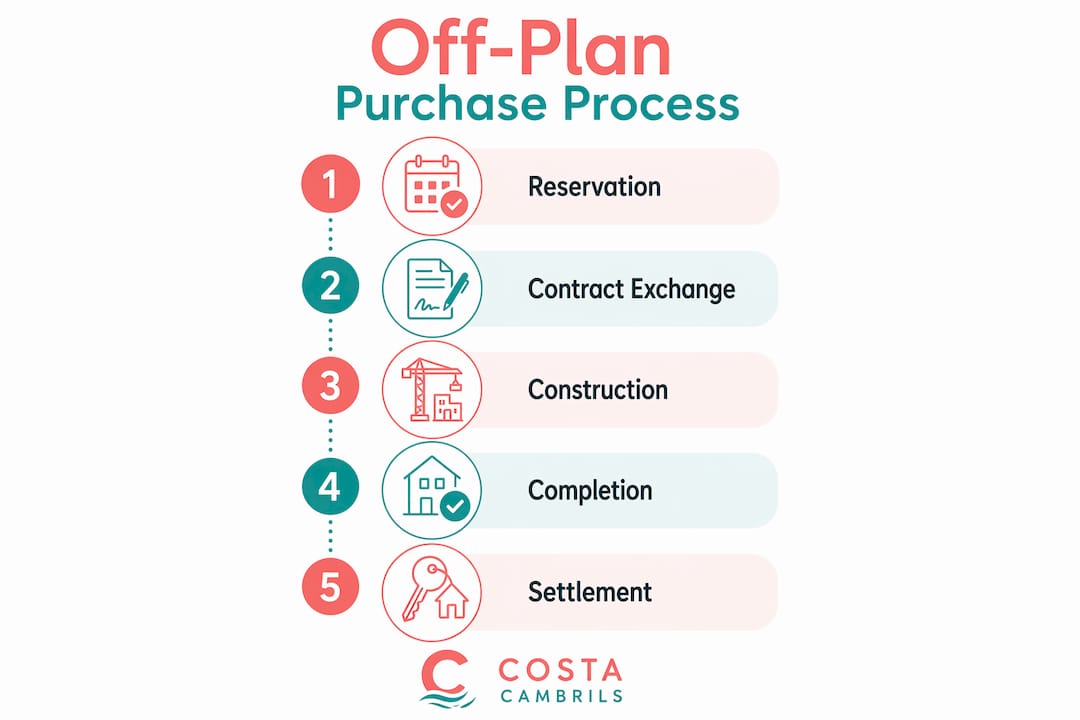
The full process typically runs 12–36 months depending on the complexity of the development. Large mixed-use projects take longer than single-block residential builds. Buyers should treat the developer’s projected completion date as a target, not a guarantee.
Delays are common and carry real consequences. A buyer who planned to move in by a specific date may face months of overlap between their current housing costs and the ongoing deposit commitment. Financial buffers of at least three to six months of carrying costs are standard advice from experienced advisors.
The property buying checklist for 2026 outlines each step in detail, including what to verify at each payment stage before releasing funds.
Pro Tip: Confirm in writing that your deposit is held in escrow before transferring any funds. Ask for the name of the escrow provider and verify it independently. This single check protects your entire deposit if the developer encounters financial difficulty.
Key Takeaways
Off-plan property purchases deliver the strongest returns when buyers combine below-market entry pricing, legal deposit protection, and a realistic timeline for long-term capital growth.
| Point | Details |
|---|---|
| Price advantage is real but conditional | Off-plan units often price 10–30% below completion value, but only stable markets convert that gap into actual gains. |
| Deposit protection is non-negotiable | Funds must sit in escrow or a solicitor trust account, not in the developer’s account. |
| Contracts favor developers | Engage a specialist solicitor before signing to identify and negotiate unfavorable clauses. |
| Mortgage eligibility must stay current | Lenders assess buyers close to completion, so financial stability throughout the build period is critical. |
| New-build warranties reduce ownership risk | A 10-year structural warranty like the NHBC Buildmark covers defects and structural issues, cutting early maintenance costs significantly. |
Off-plan is a long game, and most buyers misread the clock
The most common mistake I see is buyers treating off-plan like a short-term flip. They calculate the 10–30% price discount, assume the market will hold, and expect to sell at completion for a clean profit. That math works in a rising market. It falls apart the moment demand softens or construction runs six months over schedule.
Off-plan buying is a long-term capital growth strategy. Experts consistently recommend it for long-term appreciation in stable markets, not for quick returns. The buyers who do best are the ones who genuinely intend to hold the property, either as a primary residence or a long-term rental, and who have the financial reserves to absorb delays without panic.
The other thing most articles skip is the developer selection process. The contract terms, the warranty, the escrow arrangement, and the build quality all trace back to who is building your home. A reputable developer with a completed project portfolio is worth paying a small premium over an unknown developer offering a deeper discount. I have seen buyers lose deposits to insolvent developers who offered the most attractive pricing. The discount was the warning sign, not the selling point.
First-time buyers with flexible timelines are actually well-suited to off-plan purchases. The staged payment structure gives them time to save while the build progresses. Investors benefit most from the customization and price advantages when they select markets with genuine supply constraints and consistent demand. In both cases, patience and due diligence matter more than timing the market perfectly.
— Oscar
Luxury off-plan properties in Cambrils and the Costa Dorada
Costacambrils specializes in luxury new-build and off-plan properties along the Costa Dorada, with a focus on Cambrils and the surrounding Tarragona region. The team provides personalized advisory services for both national and international buyers, covering everything from initial property selection to legal review and completion support.

For buyers evaluating luxury off-plan opportunities in Spain, Costacambrils offers direct access to exclusive residential developments with full transparency on payment structures, developer credentials, and legal protections. The criteria for evaluating luxury properties in Cambrils guide helps buyers assess each development against the standards that matter most. Buyers can also review the full range of exclusive properties in Spain for 2026 to compare options across the region before committing.
FAQ
What is an off-plan property purchase?
An off-plan property purchase is a real estate transaction completed before the property is built, based on architectural plans and developer specifications. Buyers typically pay a reservation fee and staged deposits, with the final balance due at completion.
How long does the off-plan buying process take?
The process runs 12–36 months from reservation to final settlement, depending on the scale and complexity of the development. Delays beyond the projected completion date are common, so buyers should plan for contingencies.
Are off-plan deposits protected if a developer fails?
Deposits are protected only when held in independent escrow or a solicitor-run trust account. Funds held in the developer’s account are at risk if the developer becomes insolvent, so buyers must confirm escrow arrangements before transferring any money.
What warranty comes with a new-build off-plan property?
Most new-builds carry a 10-year structural warranty such as the NHBC Buildmark, which includes two years of direct builder responsibility for defects and eight years of structural insurance coverage. This significantly reduces maintenance costs in the early years of ownership.
Is off-plan buying suitable for first-time buyers?
Off-plan buying suits first-time buyers who have a flexible timeline and stable finances, since the staged payment structure allows time to save while construction progresses. The key requirement is maintaining mortgage eligibility throughout the entire build period, as lenders assess buyers close to completion rather than at contract exchange.
Recommended
- Apartment Buying Checklist 2026: Your Step-by-Step Guide – Inmobiliaria Costa Cambrils
- Checklist for Buying New Homes 2026: Full Guide – Inmobiliaria Costa Cambrils
- Property Buying Checklist: Steps for Smart Buyers in 2026 – Inmobiliaria Costa Cambrils
- Checklist for Buying Villas: 2026 Buyer’s Guide – Inmobiliaria Costa Cambrils