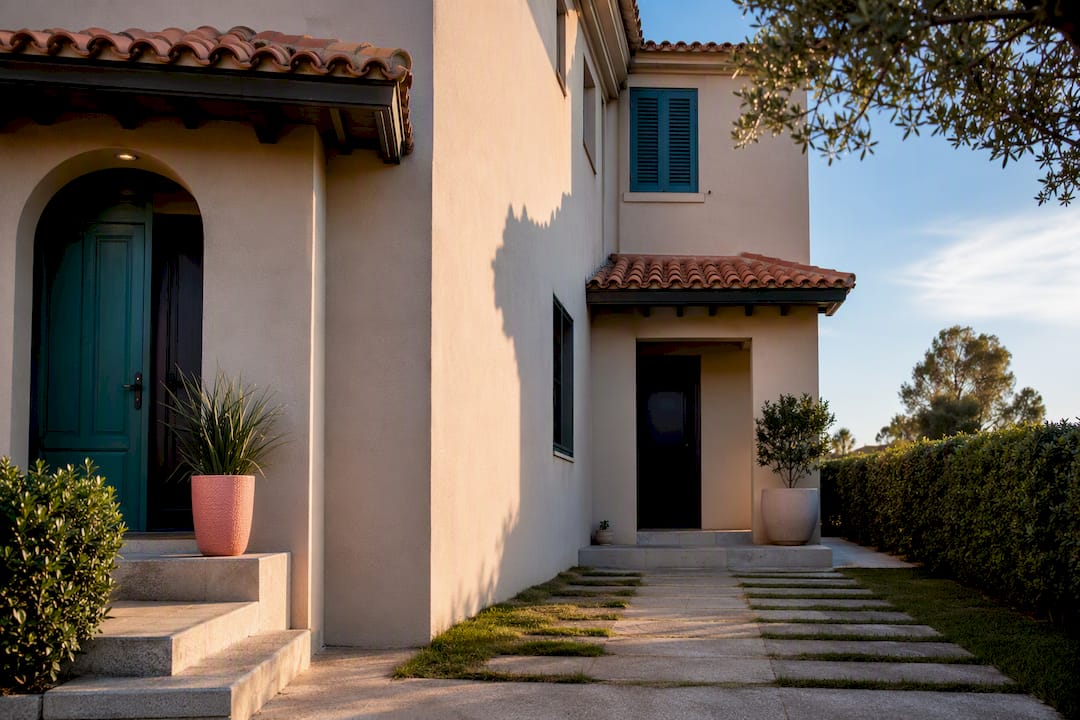
The core difference between an adosado and a pareado is the number of shared walls: an adosado sits in a row with two walls attached to neighbors, while a pareado shares just one wall and keeps three facades open to light and air. If your priorities are privacy, natural light, and a bigger garden, a pareado usually wins. If you want a lower price, shared amenities, and less private upkeep, an adosado makes more sense.
TL;DR:
- Pareados typically have larger outdoor spaces and better natural light due to three open facades, which enhances ventilation and views.
- Ownership costs for pareados are usually lower in terms of community fees but require owners to manage their own garden and exterior repairs.
- Buyers often pay a premium for pareados because they offer greater privacy, quieter living spaces, and better resale potential in stable markets.
- Adosados tend to be more affordable upfront and include shared amenities like pools, with community fees covering maintenance, which can suit budget-conscious buyers.
- A thorough on-site noise check and review of conditional documents are essential to accurately assess potential hidden costs and structural issues before purchasing.
Table of Contents
- What Is an Adosado? Structure and Layout Explained
- What Is a Pareado? Structure and Ownership Differences
- Adosado vs Pareado: Comparing Privacy, Light, and Costs
- Adosado or Pareado: Which One Fits Your Situation?
- What to Check Before Buying: A Viewing and Document Checklist
- Budgeting for Ownership: Price, Upkeep, and Resale Patterns
- How Costacambrils Helps You Compare Adosados and Pareados
- The Real Tradeoff Buyers Overestimate (and Underestimate)
- Sources
What Is an Adosado? Structure and Layout Explained
An adosado is a terraced house that shares two lateral walls with the neighboring units on either side, leaving only the front and back facades open. That row configuration is the defining trait of the typology, and it shapes almost everything else about how these homes look and live, according to MAPFRE Hogar’s breakdown of the two typologies.
Most adosados follow a similar blueprint:
- Two or three floors stacked vertically to make up for limited width
- A small private garden or terrace, often just a strip in front or back
- Placement inside larger developments with shared pools, green areas, or security gates
That community setup carries a tradeoff. You get amenities you’d otherwise pay for yourself, but you also inherit shared maintenance obligations, community statutes, and a monthly fee that covers upkeep of pools, gardens, and common infrastructure. Before you fall for a listing photo, it’s worth understanding how a chalet stacks up against an adosado in terms of layout and cost, since the terminology gets used loosely in the Spanish market.
What Is a Pareado? Structure and Ownership Differences
A pareado is one half of a paired house that shares a single lateral wall with its twin, giving it three open facades instead of two. That third exposed wall changes the entire feel of the home, per the same MAPFRE Hogar comparison.
Typical pareado layouts include:
- Larger plots, often wrapping around the side and back of the house
- Independent street access, without walking through a shared courtyard or gate
- Fewer communal amenities, since pareados less often sit inside managed urbanizations
Ownership here tends to be simpler in one sense and more demanding in another. You’re usually on your own for maintaining the garden, the pool if you have one, and any exterior repairs, since community fees for pareados are often lower or nonexistent compared to a development-style adosado.
Adosado vs Pareado: Comparing Privacy, Light, and Costs
The comparison boils down to six things that actually affect daily life and your wallet.
- Shared walls and facades: adosados have two shared walls and two open facades; pareados have one shared wall and three open facades
- Privacy and noise: medianeras, the shared party walls, transmit footsteps and voices more easily in adosados, while pareados’ single shared wall cuts that exposure roughly in half
- Light and ventilation: the extra open facade gives pareados better cross-ventilation and more windows to work with
- Plot and garden size: pareados typically come with more usable outdoor space, since the layout doesn’t need to squeeze between two neighbors
- Maintenance and community fees: adosados in managed developments pool costs for shared amenities; pareados push more of that cost (and control) onto the individual owner
- Price and resale: pareados tend to command higher prices and often hold value better in stable markets, according to Luxus Real Estates’ analysis of both typologies
Quick fact: Buyers frequently accept a higher upfront price for a pareado because of its stronger long-term revaluation potential, a pattern that shows up repeatedly in sector analyses of paired housing. That premium isn’t just about square footage. It’s paying for light, quiet, and a garden you don’t share sightlines with.
Adosado or Pareado: Which One Fits Your Situation?
The right choice depends less on which type is “better” and more on what you’re optimizing for.
- Choose an adosado if budget is the deciding factor. You’ll pay less per square meter in most markets, and a managed community often means someone else handles the pool cleaning and hedge trimming.
- Choose an adosado if you want built-in amenities without buying a bigger property. Shared pools, playgrounds, and green space come bundled into the monthly fee instead of requiring your own upkeep.
- Choose a pareado if privacy and quiet matter more than price. One shared wall instead of two meaningfully cuts down on hearing a neighbor’s television through the plaster.
- Choose a pareado if you want outdoor space you control. A larger, less overlooked garden is usually part of the deal.
- Consider a corner adosado as a middle path. These end units pick up a third open facade and extra light while keeping adosado-level pricing, a compromise several buyer guides point to as a practical workaround.
Pro Tip: Ask specifically about acoustic insulation specs before you commit to an adosado. Shared walls vary wildly in soundproofing quality, and a poorly insulated medianera can turn a quiet evening into a shared one.
What to Check Before Buying: A Viewing and Document Checklist
Walk through any adosado or pareado with a short mental checklist rather than relying on the listing description alone.
On-site, count the shared walls yourself, check window placement and orientation, and listen for noise from adjoining units during your visit. Note how big the garden actually is versus how it looks in photos, and check whether access is private or shared with neighbors.
Before making an offer, request the nota simple (the property registry extract), the community statutes and recent accounts, the energy performance certificate, and any construction documentation covering insulation and soundproofing. Idealista’s guide to choosing between the two typologies recommends this step specifically because community debts and pending special assessments rarely show up in a casual walk-through.
| What to ask | Why it matters |
|---|---|
| Who pays for pool/garden upkeep | Reveals real monthly cost beyond the sale price |
| Any pending community debts | Avoids inheriting surprise special assessments |
| Recent work on shared walls | Flags hidden structural or noise issues |
A property inspection before signing anything catches problems a nota simple won’t.
Budgeting for Ownership: Price, Upkeep, and Resale Patterns
Pareados generally cost more upfront because of their larger plots and added privacy, though location and build quality can narrow or widen that gap considerably. A well-located adosado in a premium development can outprice a mediocre pareado on a busy street.
Running costs split differently too:
- Adosado owners often pay a fixed monthly community fee that bundles pool, garden, and security costs
- Pareado owners carry their own garden and pool upkeep directly, which can cost more or less depending on plot size
- Utility costs vary less by typology and more by square footage and insulation quality
Resale liquidity tends to favor pareados in stable markets, where the combination of privacy and space keeps demand steady even when adosado inventory floods a given development.
How Costacambrils Helps You Compare Adosados and Pareados
Listings with filters for typology, city, bedrooms, and bathrooms allow you to pull up adosado or pareado properties in Cambrils and the surrounding Costa Dorada without scrolling past irrelevant listings.
Beyond search, the practical workflow looks like this:
- Use the typology filter to shortlist properties, then request a virtual tour before booking an in-person viewing
- Ask for a professional property evaluation to confirm the asking price matches comparable sales
- Consider legal advisory support to review the nota simple and community statutes before signing anything
That combination, search filters plus valuation and legal review, catches most of the surprises that turn a good-looking listing into a costly mistake.
The Real Tradeoff Buyers Overestimate (and Underestimate)
Most advice on this topic treats price as the deciding factor, and that’s backwards for a lot of buyers. The bigger variable is how much you actually value quiet. A cheaper adosado with poor wall insulation can cost you more in daily frustration than the price difference to a pareado ever would.

Where conventional guides fall short is treating community fees as pure downside. They’re not. For buyers who don’t want to manage a pool or negotiate hedge trimming, that monthly fee buys back time, and time has a price most listings don’t quote.
If you’re choosing between the two, prioritize the on-site noise test over the spreadsheet. Stand in the main living room during a weekday evening if you can. You’ll learn more about which typology fits your life in ten minutes than any comparison table will tell you, including this one.
Corner adosados deserve more attention than they get. They split the difference: adosado pricing, a third open facade, and noticeably better light. If pure pareado pricing feels out of reach, that’s the compromise worth chasing before you settle for a mid-row unit out of budget fatigue.
— Oscar
Sources
- Diferencias entre un chalet adosado o pareado — MAPFRE Hogar
- Chalet pareado vs adosado: cuál te conviene más — Luxus Real Estates
- ¿Qué es mejor, un chalet adosado o un pareado? — Idealista