
TL;DR:
- Costa Dorada is experiencing rapid population growth driven by internal migration, not tourism, which is reshaping its residential market.
- A housing supply imbalance is creating strong rental demand and capital appreciation opportunities, especially in well-located, regulatory-compliant properties.
- Urbanisation includes renaturalization projects and long-term regional planning like the PPOL, influencing property values, development types, and investment strategies.
Costa Dorada is growing faster than most international buyers realize, and not in the way you might expect. Explaining urbanisation in Costa Dorada means confronting a paradox: the region gained over 24,000 residents in five years while simultaneously experiencing a severe housing shortage that is reshaping what, where, and how people can buy. For luxury real estate investors, this isn’t background noise. It’s the central force determining which properties will hold value, which locations will appreciate, and where regulatory risk is quietly building beneath the surface.
Table of Contents
- Understanding population growth and internal migration patterns in Costa Dorada
- The housing supply imbalance and its implications
- Coastal transformation and sustainable urbanisation projects
- Governance and the Pla de Protecció i Ordenació del Litoral (PPOL) plan
- Nuances for real estate investors: internal migration, housing types, and market resilience
- Why urbanisation in Costa Dorada demands a nuanced investor lens
- How Inmobiliaria Costa Cambrils supports luxury investors navigating Costa Dorada’s urbanisation
- Frequently asked questions
Key Takeaways
| Point | Details |
|---|---|
| Significant population growth | Costa Dorada has experienced an 11% population increase driven by internal migration and affordable housing. |
| Housing supply lag | New housing construction is not keeping pace with population growth, creating market pressure and opportunities. |
| Coastal transformation trends | Urbanisation now includes sustainable coastal redevelopment projects enhancing climate resilience and public spaces. |
| Integrated coastal governance | The PPOL plan aims to harmonize urban development with environmental and climate objectives by 2028. |
| Investment strategy insights | Understanding migration patterns and housing scarcity is key to identifying resilient luxury property opportunities. |
Understanding population growth and internal migration patterns in Costa Dorada
The population surge driving urbanisation here is not primarily tourism-related. That’s the first thing to get right. The municipalities along Costa Dorada, including Calafell, Salou, and Roda de Berà, are attracting families and young professionals moving out of Barcelona and Tarragona’s congested, expensive metropolitan cores. These are permanent residents, not seasonal visitors.
Costa Daurada municipalities gained 24,176 inhabitants between 2020 and 2025, an 11.1% increase driven by internal migration and more available housing. That number matters because it signals structural urban growth rather than cyclical tourism fluctuations.
Key migration drivers include:
- Affordability gap: Housing costs in Barcelona city center remain 40 to 60% higher than equivalent coastal properties in Costa Dorada, making the move financially rational for young families.
- Remote work normalization: The shift to hybrid and remote work has broken the traditional tie to metro proximity, freeing households to prioritize space, outdoor access, and quality of life.
- Infrastructure improvements: Road and rail upgrades along the AP-7 corridor reduce commute times, making Costa Dorada genuinely viable for workers with occasional metro obligations.
- Lifestyle premium: The Mediterranean coast offers beaches, climate, and community scale that urban centers simply cannot match.
This is a decentralization trend, not a tourist-town boom. Understanding that distinction is essential for reading urbanisation trends in Costa Dorada accurately and avoiding the mistake of applying resort-market logic to what is increasingly a primary residential market.
The housing supply imbalance and its implications
Population is climbing. Construction is not keeping up. That gap is where real estate investment opportunities and risks collide.
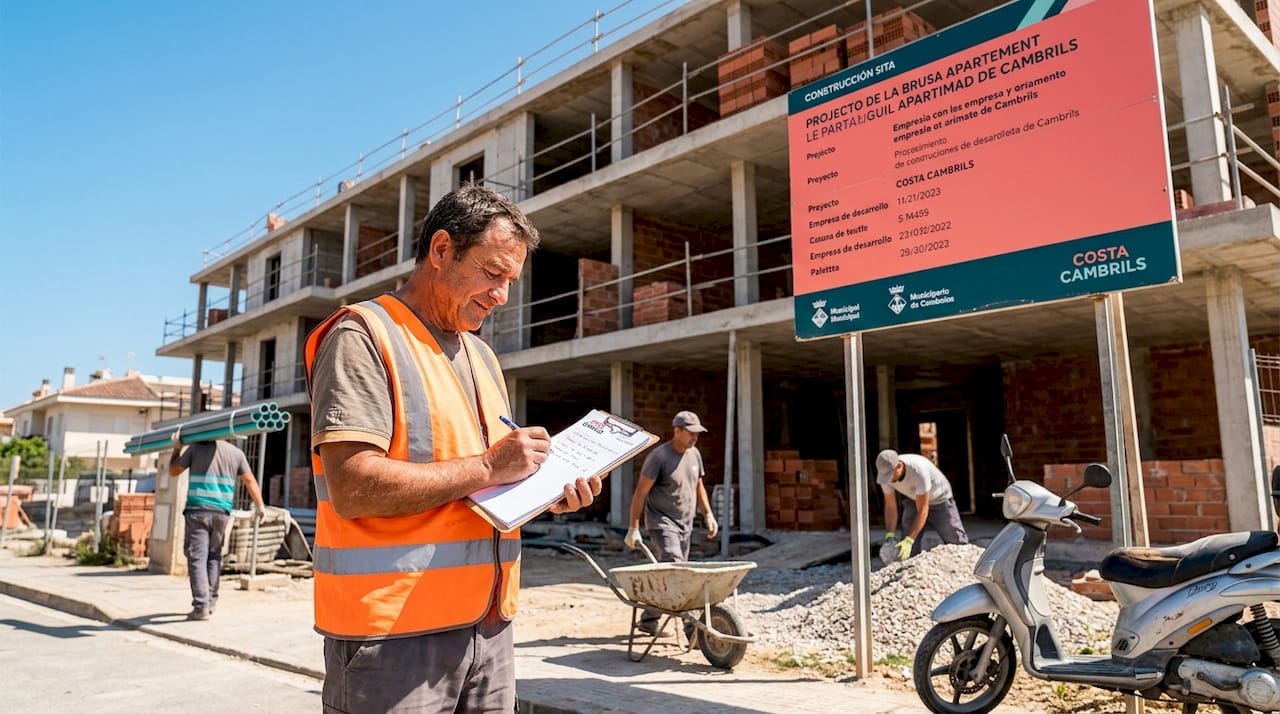
Population growth significantly outpaces new housing construction across Tarragona region municipalities, driving people-per-home ratios well above historical norms. Tarragona city itself recorded roughly 6.8 new residents per home built during recent years, compared to a sustainable ratio of around 2.5. Smaller surrounding towns show even sharper imbalances.
| Municipality type | People per new home built | Sustainable benchmark |
|---|---|---|
| Tarragona city | ~6.8 | ~2.5 |
| Coastal suburbs | 8.0 to 10.0 | ~2.5 |
| Rural periphery | 3.0 to 4.5 | ~2.5 |
The practical consequences are direct. Rental vacancy rates are falling, asking prices are climbing, and the pipeline of new builds is insufficient to relieve pressure in the near term. For investors, this translates into both opportunity and caution. Opportunity because housing supply impact pressure supports strong rental yields and capital appreciation in well-located properties. Caution because regulatory responses to shortage, including rent controls and development restrictions, are live political discussions in Catalonia.
The imbalance also reshapes what types of development make commercial sense. Greenfield projects on the urban fringe are giving way to infill rehabilitation, conversion of aging stock, and higher-density mid-rise in established neighborhoods. Buyers who understand this shift can identify undervalued properties that will benefit from densification rather than being caught off-guard by it.
Pro Tip: When evaluating a Costa Dorada property, ask for the municipal housing completion data for the past three years. If it’s below one new home per 4 to 5 residents of growth, you’re looking at a supply-constrained market with durable price support.
Coastal transformation and sustainable urbanisation projects
Urbanisation in Costa Dorada is not only about adding density. In some of its most significant moves, it is actively removing built environment to restore natural and public space. This “de-urbanization” dimension is something most investors overlook entirely.
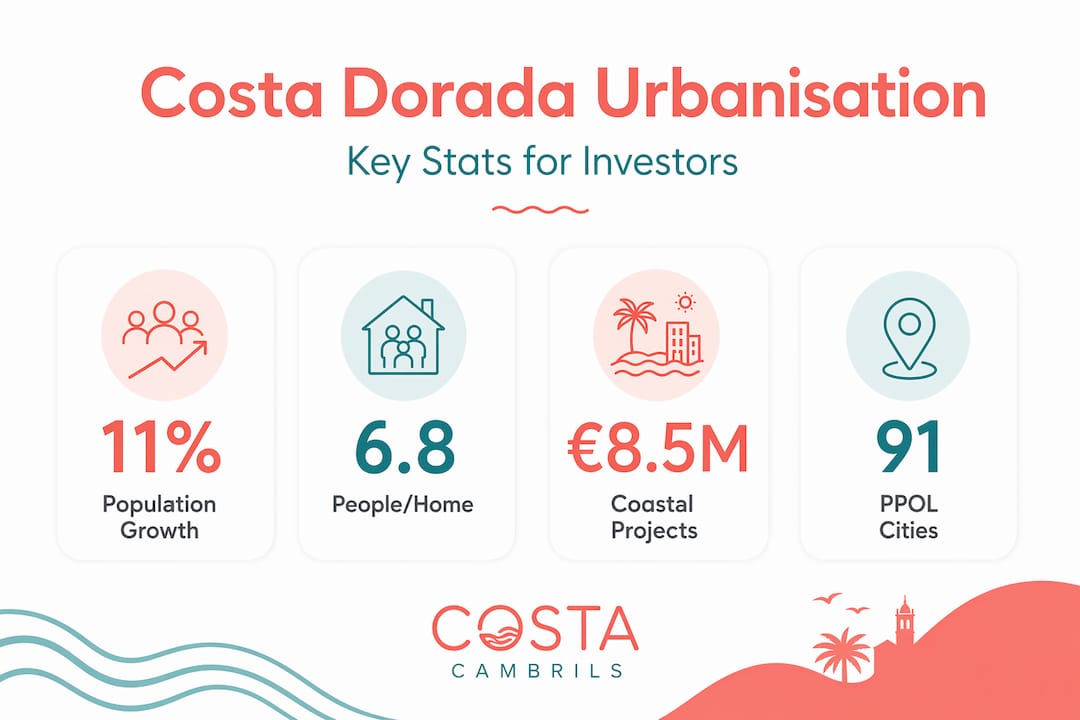
La Pineda’s promenade is the clearest example. The La Pineda redevelopment removed vehicle lanes to expand beach and pedestrian areas with an €8.5 million investment, integrating climate resilience with improved public amenity. It is explicitly positioned as a model for transforming Spain’s coastline, meaning other Costa Dorada municipalities are watching and likely to follow.
What does this mean in practice for property investment?
- Proximity premiums shift: Properties adjacent to renaturalized promenade areas see livability scores and buyer demand rise, often faster than new-build zones.
- Climate adaptation signals: Municipalities investing in resilience infrastructure signal long-term commitment to the area, reducing the risk of coastal erosion-driven asset depreciation.
- Tourism quality over quantity: Pedestrianized, green coastal environments attract higher-spending visitors and more affluent permanent residents, lifting the surrounding property market segment.
“The transformation of La Pineda is not just an infrastructure project. It’s a statement about what kind of coast Catalonia wants to be, and which communities will benefit from the transition.” This framing, shared by Catalan urban planning observers, captures the political intention behind projects that look like landscaping but function as economic repositioning.
Investors focused exclusively on built square meters miss the value signal embedded in these coastal urban transformation projects entirely. Renaturalization is not a threat to property values. In well-governed areas, it’s a driver of them.
Governance and the Pla de Protecció i Ordenació del Litoral (PPOL) plan
Every coastal municipality in Catalonia will eventually operate under the PPOL, the Pla de Protecció i Ordenació del Litoral. This is the regional government’s master framework for managing how the coast develops, shrinks, adapts, and functions over the coming decades. For investors, it’s the most consequential policy document on the horizon.
PPOL targets approval by 2028, coordinating coastal land use and marine management across 692 km of coastline with integrated climate risk reduction and renaturalization strategies. Its scope covers a 1 km inland band and extends 22.2 km offshore, affecting zoning, development permissions, and ecosystem recovery priorities across 91 municipalities.
Key milestones to track as an investor:
- Public consultation completion (2026): Municipal governments and residents across 91 towns are submitting feedback now. This shapes zoning priorities and which development types get favored or restricted.
- Draft plan release (2027): The draft will contain specific land classification changes, including which coastal strips move from buildable to protected status.
- Final approval (2028): Once ratified, PPOL creates binding land-use rules that supersede many local planning decisions.
- Implementation phase (post-2028): Compliance timelines, permit transitions, and enforcement begin, creating both short-term uncertainty and medium-term regulatory clarity.
Pro Tip: If you’re evaluating a property within 500 meters of the Costa Dorada coastline, instruct your legal advisor to flag its current status under PPOL consultation documents before you proceed to due diligence. A plot currently zoned buildable could shift classification before your project completes. Check Costa Dorada market trends to stay current on how PPOL milestones are moving the market.
Nuances for real estate investors: internal migration, housing types, and market resilience
Not all luxury property performs equally under these urbanisation conditions. The distinction that matters most is whether an asset serves year-round residents or seasonal tourism. Internal migration from Barcelona creates demand for the first category. And that demand is structurally more durable.
Family-oriented luxury properties aligned with internal migration show more resilience than seasonal assets because they tap into stable, income-backed demand from households making long-term relocation decisions rather than vacation spending choices.
What this looks like in practice:
- Resilient asset profile: 3 to 4 bedroom villas or townhouses with home office space, garden, and proximity to schools and services. These align with the family decentralization pattern from Barcelona.
- More vulnerable asset profile: High-end apartments in tourist-heavy zones without strong year-round resident communities. Exposed to regulatory risk on short-term rentals and seasonal demand volatility.
- Micro-location matters more than ever: A municipality with strong infrastructure, a balanced housing pipeline, and PPOL-compliant zoning will outperform a neighboring one with better beaches but regulatory uncertainty.
| Property profile | Demand driver | Resilience level | Key risk |
|---|---|---|---|
| Family villa, year-round zone | Internal migration | High | Supply constraint easing |
| Tourist apartment, seasonal zone | Holiday demand | Medium | Short-term rental regulation |
| Coastal plot, PPOL-affected zone | Development speculation | Variable | Zoning reclassification |
Pro Tip: Before committing capital, map the target property’s luxury property urbanisation insights against municipal housing completion rates, PPOL zone status, and the ratio of year-round to seasonal residents in the neighborhood. These three data points will tell you more about 5-year appreciation than any headline price index.
Why urbanisation in Costa Dorada demands a nuanced investor lens
Here is the uncomfortable truth that most market commentary skips: the headline population growth numbers in Costa Dorada are genuinely impressive, and almost entirely misleading if you stop at the number.
Urbanisation here is driven by socio-economic migration and housing market asymmetries, not a uniform coastal expansion wave. That means growth is concentrated, uneven, and subject to reversal in municipalities that fail to deliver infrastructure, services, and regulatory predictability alongside population. The communities gaining the most residents are not necessarily the ones building the most homes. That gap is where investors either win or get trapped.
The housing shortage is a systemic problem, not a temporary blip. Development lags in Catalonia reflect permitting complexity, land-use constraints, and financing bottlenecks that will not resolve in a two or three year investment window. That’s actually good news for existing quality stock and bad news for buyers assuming new supply will normalize prices quickly.
The renaturalization projects are also a more significant signal than they appear. When a government spends €8.5 million to remove a road lane and put a beach in its place, it’s telling you where it thinks future value lies. Properties that align with that direction, walkable, low-density, green, and community-focused, have a policy tailwind that pure built-environment plays do not.
PPOL will introduce genuine regulatory uncertainty between now and 2028. But after approval, it will create the coordinated, long-term planning framework that serious institutional investors actually want before deploying significant capital. The window between now and final ratification is both the riskiest and potentially the most opportunistic period to act with precision.
Our view: the investors who will outperform in Costa Dorada are not those chasing population statistics. They are the ones who understand governance direction, read investment opportunities in Costa Dorada through the lens of housing typology and migration quality, and position in municipalities where climate adaptation investment is aligned with long-term livability premiums.
How Inmobiliaria Costa Cambrils supports luxury investors navigating Costa Dorada’s urbanisation
Building on everything covered here, the practical challenge is translating this urbanisation analysis into specific property decisions. That’s where local expertise creates real advantage.
At Inmobiliaria Costa Cambrils, we work exclusively in the Costa Dorada luxury segment, which means we track PPOL milestones, housing supply data, and internal migration patterns as part of our daily practice, not as academic exercises. We can help you with evaluating luxury properties in Cambrils using the kind of granular, governance-aware criteria this urbanisation picture demands. Our custom real estate services in Costa Dorada align your investment horizon, lifestyle requirements, and regulatory environment into a coherent acquisition strategy. And our integral real estate management services keep your asset performing through the supply-demand shifts and climate adaptation changes ahead. If you’re serious about this market, start with a conversation.
Frequently asked questions
What is driving the rapid population growth in Costa Dorada?
Internal migration from Barcelona and Tarragona, combined with relatively more affordable housing options along the coast, are the primary drivers, with remote work flexibility accelerating the trend since 2020.
Why is there a housing shortage despite growing urbanisation?
Construction has not kept pace with population growth due to permitting complexity and land-use constraints, pushing demand toward infill, rehabilitation, and existing quality stock rather than new expansions.
How are climate and sustainability influencing urban development in Costa Dorada?
Coastal redevelopment projects like La Pineda signal a deliberate shift toward de-urbanization and renaturalization, improving resilience and livability while repositioning adjacent property values upward.
What is the significance of the PPOL plan for investors?
PPOL will unify coastal management across 91 municipalities by 2028, with zoning reclassifications that could directly affect what is buildable, permissible, or protected along Costa Dorada’s coastline.
Which types of luxury properties are more resilient amid urbanisation changes?
Family-oriented, year-round residences tied to internal migration demand show stronger resilience than seasonal amenity-focused assets because their demand base is structural rather than discretionary.