
TL;DR:
- Knowing Spanish law, landlords cannot demand more than one month for the security deposit, but additional guarantees are negotiable.
- Reducing or eliminating the extra guarantee offers significant upfront savings, making it the primary target in negotiations.
Knowing how to negotiate rental terms in Spain starts with one fact: Spanish law, specifically the Ley de Arrendamientos Urbanos (LAU), sets the legal floor for every residential rental contract. The LAU defines what landlords can and cannot demand, which means you have more leverage than most expats realize. The real negotiation battleground is not the monthly rent. It is the security deposits and additional guarantees. Get those right, and you control the financial risk of the entire tenancy.
How to negotiate rental terms in Spain: know the legal deposit limits first
The LAU establishes a mandatory one-month cash security deposit, called the fianza, for all standard residential rentals (vivienda habitual). This deposit is fixed by law. You cannot negotiate it away, and landlords cannot legally demand more than one month for this specific instrument.
Beyond the fianza, landlords can request additional guarantees up to a maximum of two extra months. That brings the legal ceiling to three months total: one mandatory fianza plus up to two months in additional guarantees. The additional guarantee is often structured as an aval bancario, a bank guarantee issued by your financial institution.
Tenants often waste energy trying to negotiate the fianza itself, which is legally fixed. The smarter target is the additional guarantee. Reducing it from two months to one month, or eliminating it entirely, saves you a significant upfront cost and is the most realistic concession a landlord will make.
| Deposit type | Legal basis | Amount | Negotiable? |
|---|---|---|---|
| Fianza (security deposit) | Article 36 LAU | 1 month’s rent | No |
| Additional guarantee | Article 36 LAU | Up to 2 months | Yes |
| Aval bancario (bank guarantee) | Landlord request | Varies | Yes |
| Total legal maximum | LAU combined | 3 months | Partial |
Pro Tip: Ask the landlord to specify in writing which portion of the upfront payment is the fianza and which is an additional guarantee. This distinction matters legally if there is a dispute at the end of the tenancy.
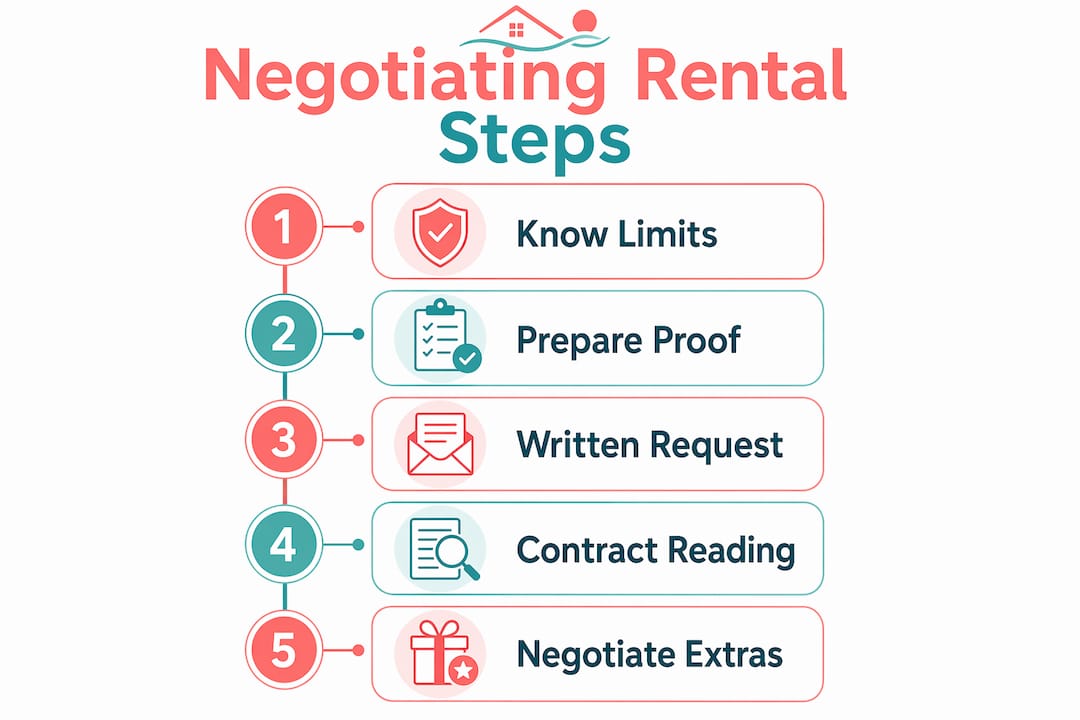
What financial proof helps you get better lease terms?
The primary risk for landlords is non-payment. Every concession a landlord makes, whether on rent or guarantees, depends on how well you eliminate that fear. Your job before any negotiation is to build a financial profile that makes you look like the safest possible tenant.
The documents that carry the most weight with Spanish landlords are:
- A Spanish employment contract (contrato de trabajo) showing a stable income
- Three to six recent payslips (nóminas) demonstrating consistent earnings
- Bank statements from the past three to six months showing a healthy balance
- A Spanish tax identification number (NIE), which signals legal residency status
- References from previous landlords, ideally in Spain
For expats without a Spanish employment contract, offering several months of rent in advance is the single most effective substitute. A landlord who receives three to six months upfront has no immediate non-payment risk. That security makes them far more likely to accept a lower monthly rent or drop the additional guarantee requirement entirely.
International transfers can complicate upfront payments. Services like Wise allow you to send euros from abroad at mid-market exchange rates, which removes the friction of cross-border payments and shows the landlord you can pay reliably and quickly.

Pro Tip: Prepare a one-page financial summary in Spanish before any viewing. Include your monthly income, employment status, and a brief statement of your rental history. Landlords rarely see this level of preparation from expats, and it sets you apart immediately.
What are the 2026 legal updates on lease renewals and rent increases?
Real Decreto-ley 8/2026 introduced significant protections for tenants whose contracts expire before december 31, 2027. These rules change the negotiating dynamic for anyone approaching the end of a lease.
The key provisions are:
- Tenants can request an extraordinary lease extension of up to two additional years beyond the standard contract term
- Landlords are legally obligated to accept the extension unless specific exemptions apply
- The annual rent increase during the extension period is capped at 2%, regardless of any other index
- “Gran tenedor” landlords (those owning more than ten properties) face stricter conditions and may have additional obligations in designated stressed rental zones
Requests for a lease extension under Real Decreto-ley 8/2026 must be submitted in writing with proof of delivery, such as a burofax or a certified email. Without formal written notice, the landlord has no legal obligation to comply.
The written request requirement is not a formality. It is the trigger that activates the landlord’s legal obligation. Send your extension request at least two months before your contract ends to give yourself time to resolve any disputes before the expiry date.
How to read and negotiate Spanish rental contract clauses
Understanding rental contracts in Spain requires knowing which sections carry the most financial risk. Every standard contract contains five core areas where negotiation is possible and where disputes most commonly arise.
| Contract section | What it covers | Key negotiation point |
|---|---|---|
| Renta | Monthly rent amount and payment date | Negotiate reduction in exchange for advance payment |
| Fianza | Mandatory one-month deposit | Fixed by law; confirm it is labeled correctly |
| Garantías adicionales | Additional guarantees beyond fianza | Push to reduce from 2 months to 1 or zero |
| Gastos | Utility and community fee responsibilities | Clarify which expenses are tenant vs. landlord |
| Duración | Contract length and renewal conditions | Negotiate break clauses or extension rights |
The Gastos section causes the most unexpected costs. Contracts often shift expenses like community fees (gastos de comunidad) or the annual property tax (IBI) onto tenants, even though Spanish law does not require this. Read every line of this section and push back on any cost that is not standard.
The LAU sets the legal floor for all rental contracts. Any clause that contradicts LAU tenant protections is legally void. The problem is that void clauses still appear in contracts, and tenants who do not recognize them end up complying unnecessarily. Identify these clauses before signing and request their removal in writing.
Build a negotiation worksheet before any contract discussion. List every monetary term: monthly rent, fianza amount, additional guarantee amount, first-month payment, and all gastos. Assign a target figure and a rationale to each item. This approach turns a vague conversation into a structured negotiation with clear positions on both sides.
Pro Tip: Never accept a verbal agreement on contract changes. Any modification to the standard contract must appear in the signed document or a written addendum. Verbal promises are unenforceable under Spanish law.
What practical steps lead to a successful negotiation with a landlord?
Preparation and timing determine the outcome of most rental negotiations in Spain. The steps below apply whether you are dealing directly with a landlord or through a real estate agent.
- Research comparable rents. Check listings on Idealista and Fotocasa for similar properties in the same neighborhood. Arrive at the negotiation knowing the market rate.
- Negotiate in Spanish when possible. Communicating in Spanish signals respect and reduces the landlord’s perception of risk. Even basic Spanish improves your position.
- Time your approach. The rental market in Spain slows between october and february. Landlords with vacant properties in those months are more open to concessions.
- Lead with your strengths. Present your financial documents before making any request. Establish your reliability first, then introduce your asks.
- Make one request at a time. Asking for lower rent, a reduced guarantee, and a longer break clause simultaneously signals desperation. Prioritize your most valuable concession and negotiate from there.
- Get every agreement in writing. Explicitly negotiate contract wording to reflect what was agreed verbally. A signed contract with the correct terms is your only legal protection.
- Keep records of all communication. Save emails, WhatsApp messages, and any written correspondence. These records matter if a dispute arises later.
The most common mistake expats make is treating the negotiation as a single conversation. Spanish landlords often need time to consult family members or their own advisors. Follow up politely after 48 hours if you do not hear back. Patience reads as confidence, not weakness.
Key Takeaways
Successful lease negotiation in Spain requires knowing the LAU legal limits, targeting additional guarantees rather than the fixed fianza, and presenting clear financial proof to reduce landlord risk.
| Point | Details |
|---|---|
| Focus on additional guarantees | The fianza is fixed by law; negotiate the extra guarantee from 2 months down to 1 or zero. |
| Financial proof is your leverage | Payslips, a Spanish employment contract, or advance rent payments reduce landlord risk and unlock concessions. |
| 2026 extensions are legally enforceable | Request a lease extension in writing before your contract expires to trigger the landlord’s legal obligation. |
| Read the Gastos clause carefully | Community fees and IBI can be shifted to tenants by contract; push back on any non-standard expense. |
| Get every change in writing | Verbal agreements are unenforceable; all negotiated terms must appear in the signed contract. |
What I have learned negotiating Spanish rentals as an expat advisor
Most expats walk into a Spanish rental negotiation focused on the wrong number. They fixate on shaving 50 euros off the monthly rent when the real money is sitting in the additional guarantee. Two months of additional guarantee on a 1,200-euro-per-month apartment is 2,400 euros tied up for the entire tenancy. Cutting that to one month saves you 1,200 euros upfront and costs the landlord nothing in terms of monthly cash flow.
The landlords I have seen respond best to preparation, not pressure. Showing up with a one-page financial summary, a clear NIE, and a polite request in Spanish changes the entire tone of the conversation. It signals that you understand the system and that you are not a risk. That perception is worth more than any negotiating tactic.
The 2026 decree is a genuine shift in tenant power, but only for those who use it correctly. I have seen tenants lose their extension rights simply because they sent a WhatsApp message instead of a burofax. The law is on your side, but the procedure has to be followed exactly.
One last point: do not sign a contract with clauses you plan to ignore or dispute later. If a clause contradicts the LAU, get it removed before signing. Agreeing to a void clause and then arguing about it at the end of the tenancy is expensive and exhausting. Fix it at the start.
— Oscar
Renting in Cambrils and the Costa Dorada: how Costacambrils can help
Finding the right rental property on the Costa Dorada is one thing. Negotiating the contract correctly is another. Costacambrils specializes in luxury residential rentals in Cambrils and the surrounding Tarragona region, with a team that understands both Spanish rental law and the specific dynamics of the local market.
Whether you are an expat relocating to the Costa Dorada or an investor evaluating a long-term rental, Costacambrils provides property evaluations, legal guidance, and full contract support. The team can help you identify which clauses to negotiate, what financial documents to prepare, and how to structure your offer to get the best possible terms. Browse the luxury rental properties in Cambrils or review the step-by-step rental checklist to start your search with a clear plan.
FAQ
What is the maximum deposit a landlord can demand in Spain?
The legal maximum is three months total: one mandatory fianza plus up to two months in additional guarantees, as set by Article 36 of the LAU. Any demand above this ceiling is legally void.
Can I negotiate the rent amount directly with a Spanish landlord?
Yes, rent is fully negotiable before signing. Offering advance rent payments is the most effective way to secure a lower monthly rate, particularly for expats without a Spanish employment contract.
How do I request a lease extension under the 2026 rules?
Submit a written request, such as a burofax or certified email, to your landlord before your contract expires. The 2026 decree obliges landlords to accept extensions of up to two years for contracts expiring before december 31, 2027.
What does the Gastos clause cover in a Spanish rental contract?
The Gastos section defines which expenses the tenant pays beyond the monthly rent. It can include community fees, building maintenance costs, and sometimes the IBI property tax. Negotiate this clause carefully before signing.
Is a verbal rental agreement legally binding in Spain?
Verbal agreements are difficult to enforce in Spanish courts. All negotiated terms, including rent reductions, guarantee amounts, and expense responsibilities, must appear in the signed written contract to be legally protected.
Recommended
- Consejos para alquilar vivienda vacacional en 2026 – Inmobiliaria Costa Cambrils
- Cómo funciona el alquiler vacacional en España 2026 – Inmobiliaria Costa Cambrils
- Legal Requirements for Buying in Spain: 2026 Guide – Inmobiliaria Costa Cambrils
- Top advantages of Spanish real estate investing in 2026 – Inmobiliaria Costa Cambrils