
TL;DR:
- Virtual tours enable buyers to remotely explore properties with full control, enhancing spatial understanding and engagement. They reduce days on market and improve remote screening while providing accurate, immersive property experiences. Buyers and investors should focus on interactivity, room connections, and floor plan integration for effective virtual property evaluation.
A virtual tour in real estate is an interactive digital walkthrough that lets buyers explore a property remotely, with full control over navigation and perspective. Unlike static photos or a linear video, a virtual property tour gives you the ability to move room to room, look in any direction, and assess spatial flow on your own terms. The National Association of Realtors (NAR) confirms that virtual tours give spatial context to buyers, enhancing understanding before an in-person visit. For homebuyers evaluating properties across cities or investors assessing multiple listings at once, this tool changes the entire pre-visit process.
What is a virtual tour in real estate, exactly?
A virtual tour is a navigable, on-demand digital experience of a property’s interior and exterior. The industry term most commonly used is “interactive 3D tour” or “360-degree walkthrough,” depending on the technology behind it. Both terms describe the same core function: giving buyers remote access to a property with spatial depth that photos cannot provide.

Static listing photos show you what a room looks like from one fixed angle. A virtual property tour lets you spin around, look up at ceiling height, peer through doorways, and judge how one room connects to the next. That difference matters when you are deciding whether to book a flight or drive two hours for a showing.
The role of virtual tours in real estate has grown sharply as buyers expect more information before committing time to a visit. Platforms like Matterport and Ricoh have made professional-grade tours accessible to individual agents and large brokerages alike. The result is a market where buyers increasingly filter out listings that offer only photos.
What are the common types of virtual tours?
Not every virtual tour works the same way. The format determines how much control you have and how accurately you can assess a space.
- 360-degree photo tours. These are built by stitching panoramic images together into a navigable sequence. You click through hotspots to move between rooms. The experience is smooth and widely compatible with any browser or mobile device.
- Interactive 3D tours. Tools like Matterport create a full three-dimensional model of the property. You can move freely through the space, switch to a dollhouse overhead view, and measure distances between walls.
- VR-ready tours. Some 3D tours are compatible with headsets like Meta Quest. This format delivers the most immersive experience but requires the buyer to own or access a headset.
- Embedded floor plans and hotspots. NAR data shows floor plans rank just after photos in buyer preference. The best tours pair interactive navigation with an embedded floor plan so you always know where you are in the home.
- Video walkthroughs. These are linear recordings, not interactive tours. You watch; you do not navigate. Many listings label these as “virtual tours,” which creates confusion for buyers.
Pro Tip: Before spending time on a tour, click inside it and try to move freely. If you cannot control your own path through the property, it is a video, not a true virtual tour.
Virtual tours cost significantly less to produce than professional video walkthroughs while delivering greater interactivity. That cost advantage has pushed adoption across all price segments, from starter homes to luxury villas.
How do virtual tours benefit homebuyers and real estate investors?
The practical benefits of virtual tours go well beyond convenience. They change how buyers evaluate properties and how investors screen opportunities.
- Spatial understanding before the visit. CubiCasa president Jeff Allen states that virtual tours help buyers answer two critical questions: does the layout fit their lifestyle, and will their furniture actually fit? Those are questions photos cannot answer.
- Remote screening at scale. An investor evaluating ten properties in Cambrils or Barcelona does not need to visit all ten. Virtual tours allow a first-pass elimination of properties that do not meet spatial or layout requirements.
- Anytime access. Tours are available 24 hours a day. A buyer in New York can walk through a property on the Costa Dorada at midnight without coordinating with an agent.
- Reduced buyer uncertainty. Virtual tours improve buyer engagement by giving buyers control over navigation, which directly reduces uncertainty about whether a property is worth pursuing.
- Stronger purchase motivation. A 2025 study published in Scientific Reports found that virtual tours influence real-world purchase intent through usability and emotional presence, not just visual display. A tour that feels easy to use and emotionally engaging produces stronger buying motivation than one that simply looks good.
“Virtual tours are not entertainment. They are functional buyer assessment tools that help people decide whether a property deserves an in-person visit.” — NAR
The importance of virtual tours is clearest for international buyers and long-distance investors. A buyer relocating from London to the Costa Dorada cannot realistically visit every property on their shortlist. A well-built virtual tour replaces the first two or three exploratory visits, saving weeks of travel time.
What impact do virtual tours have on property sales?
The role of virtual tours in property sales is measurable, but the results are more specific than most agents advertise.
| Metric | With virtual tour | Without virtual tour |
|---|---|---|
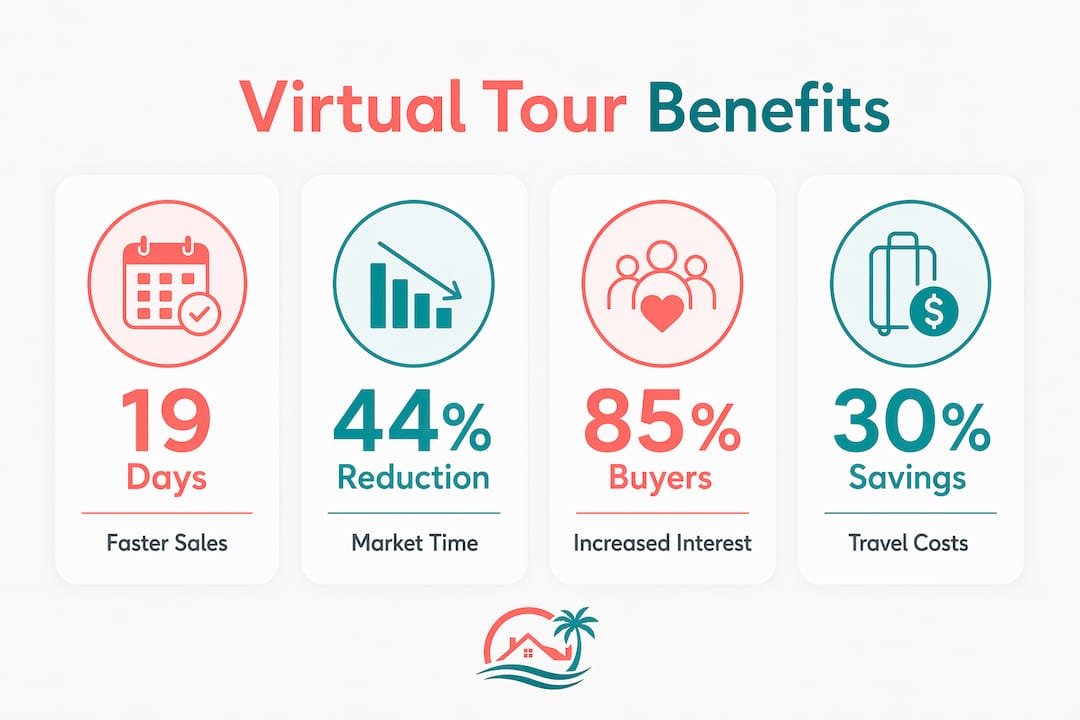
| Average days on market | 19 days | 34 days |
| Effect on selling price | No significant change | No significant change |
| Buyer engagement | Higher | Lower |
| Suitability for newer/larger homes | Strong | Standard |
A 2025 University of Texas at Dallas study analyzing 43,000 listings found that VR tours reduce days on market from 34 to 19 on average. That is a meaningful acceleration in sales velocity. The same study found no significant effect on final selling price, which tells investors that virtual tours are a marketing efficiency tool, not a price premium tool.
Virtual tours work best for newer and larger homes. The technology provides an honest, accurate representation of a property. That transparency is an advantage when the home is in good condition. For older or outdated properties, VR cannot improve the look or quality of what exists. Buyers will see exactly what is there, which can work against a property that needs renovation.
Pro Tip: If you are an investor evaluating a property that needs work, use the virtual tour to assess structural layout and room count, not finish quality. The tour gives you an accurate spatial read even when the cosmetics are dated.
The role of virtual tours also extends to the agent relationship. Buyers who complete a virtual tour before a showing arrive better prepared, ask more specific questions, and make faster decisions. Agents report that digital marketing tools, including virtual tours, reduce the number of unproductive showings significantly.
How should buyers and investors use virtual tours effectively?
A virtual tour is only as useful as the attention you bring to it. Most buyers click through quickly and miss the details that matter most.
- Check room-to-room connections. The most valuable spatial information in a tour is how rooms connect. Does the kitchen open directly to the living area? Is the master bedroom separated from the other bedrooms? Walk the tour the way you would walk the actual home.
- Verify interactivity. True virtual tours are interactive and navigable. If you cannot control your own path, you are watching a video. Only interactive tours give you the navigation control needed for thorough remote evaluation.
- Use the floor plan. If the tour includes an embedded floor plan, use it. Cross-reference your position in the tour with the floor plan to build an accurate mental model of the home’s layout.
- Measure mentally. Some 3D tours, particularly those built on Matterport, include measurement tools. Use them to check whether your sofa fits in the living room or whether your car fits in the garage.
- Treat the tour as spatial due diligence. Buyers should use virtual tours to focus on multi-angle views and how rooms connect, not just to confirm the property looks attractive. The goal is to anticipate the in-person experience accurately.
- Note what the tour does not show. Outdoor space, street noise, natural light at different times of day, and neighborhood context are not captured in most tours. Use the tour to qualify the interior, then verify everything else in person.
Buyers who approach virtual tours as a pre-visit assessment tool rather than a marketing video get far more value from them. The difference is intent. Passive viewing confirms interest. Active navigation confirms fit.
Key Takeaways
Virtual tours are the most efficient remote evaluation tool available to homebuyers and investors, cutting average days on market from 34 to 19 while delivering spatial insight that photos and videos cannot match.
| Point | Details |
|---|---|
| Definition of a virtual tour | An interactive, navigable digital walkthrough that gives buyers spatial control over property exploration. |
| Sales impact | Virtual tours reduce average days on market from 34 to 19 but do not significantly increase selling price. |
| Best use for buyers | Treat tours as spatial due diligence, focusing on room connections, layout flow, and embedded floor plans. |
| Key distinction | True virtual tours are interactive. Video walkthroughs are linear. Only interactive tours support thorough remote evaluation. |
| Emotional engagement matters | Purchase motivation increases when a tour is easy to use and emotionally engaging, not just visually polished. |
Why virtual tours have changed how I evaluate property
The most underrated thing about a well-built virtual tour is what it reveals about a seller’s seriousness. When a listing includes a full interactive 3D tour with an embedded floor plan, that seller has invested in transparency. That signals something about the condition of the property and the professionalism of the agent behind it.
I have seen buyers dismiss virtual tours as a gimmick, then spend hours driving to showings they could have eliminated in ten minutes online. The buyers who use tours as spatial due diligence tools consistently make faster, more confident decisions. They arrive at showings with specific questions rather than general impressions.
The one thing most articles get wrong about the importance of virtual tours is the focus on visual quality. The 2025 Scientific Reports research makes it clear that emotional presence and usability drive purchase motivation, not just how good the property looks on screen. A tour that is easy to navigate and feels immersive does more work than a tour that is technically beautiful but clunky to use.
For investors, the math is straightforward. Virtual tours cut days on market nearly in half. That is not a marginal improvement. It is a structural change in how fast capital moves through a transaction. Any investor who ignores that is leaving efficiency on the table.
— Oscar
Luxury property search on the Costa Dorada with Costacambrils
Costacambrils specializes in luxury real estate sales and rentals across the Costa Dorada, with a focus on Cambrils and the surrounding area. The platform features virtual tour video walkthroughs integrated directly into property listings, giving national and international buyers a genuine remote evaluation experience before committing to a visit.
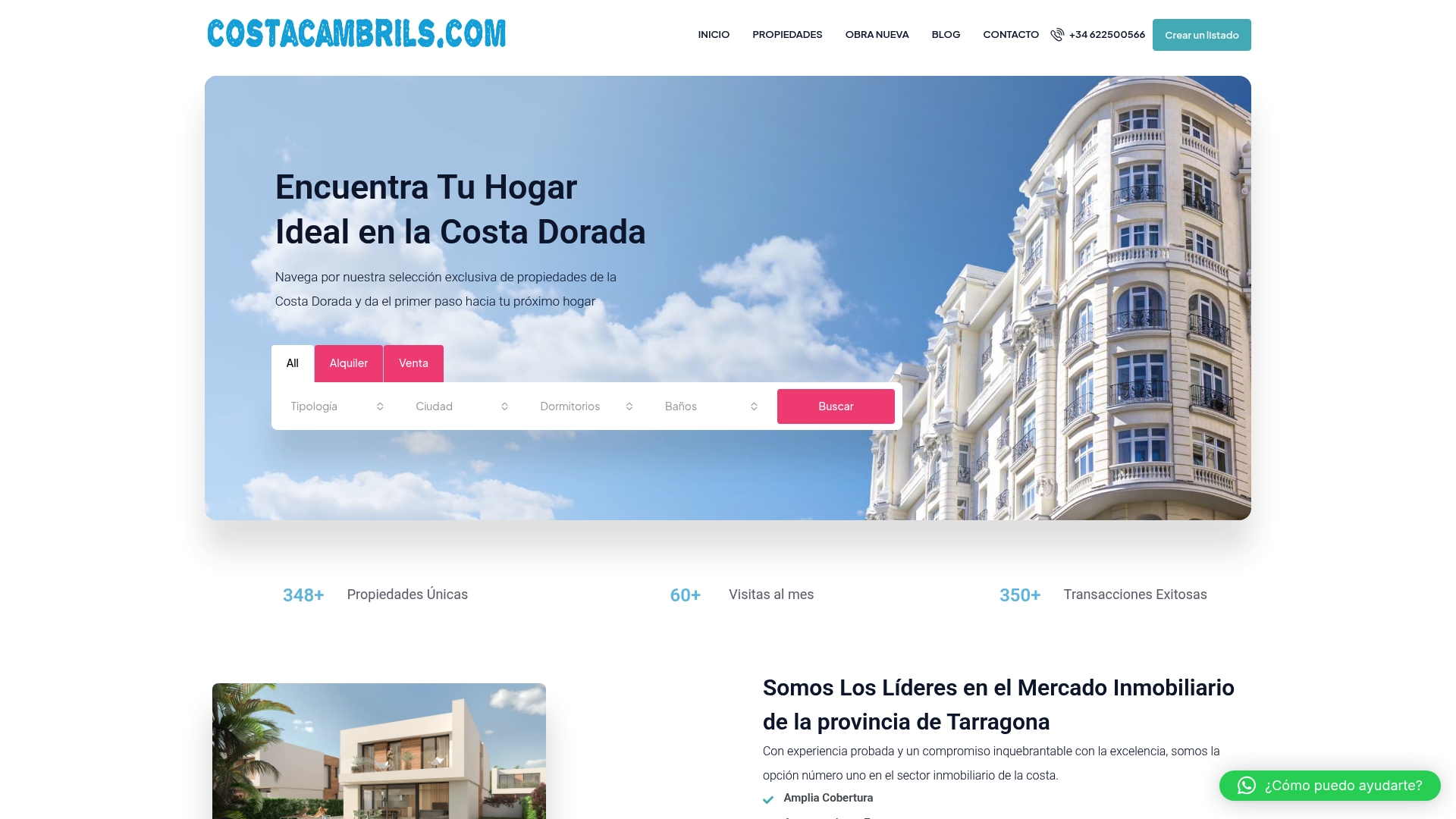
For buyers and investors targeting premium villas, new-build developments, and exclusive residences on the Costa Dorada, Costacambrils offers a full-service approach that includes property valuations, legal advisory, and portfolio management. Explore the luxury real estate services available in Cambrils, or connect directly with the expert team to experience a virtual tour of current exclusive listings firsthand.
FAQ
What is a virtual property tour?
A virtual property tour is an interactive digital walkthrough of a home that buyers can navigate remotely. Unlike a video, it gives the viewer control over movement and perspective.
How does a virtual tour differ from a video walkthrough?
A virtual tour is interactive and navigable. A video walkthrough is a linear recording you watch without control. Only interactive tours allow thorough remote spatial evaluation.
Do virtual tours help sell homes faster?
A 2025 University of Texas at Dallas study found that virtual tours reduce average days on market from 34 to 19. They accelerate sales velocity but do not increase the final selling price.
What should I look for when using a virtual tour?
Focus on how rooms connect, verify the floor plan matches what you see, and use any built-in measurement tools. Treat the tour as a spatial assessment, not a visual preview.
Are virtual tours useful for older properties?
Virtual tours provide an accurate representation of any property. For older or outdated homes, that transparency can work against the listing, since the tour shows exactly what exists without enhancement.