TL;DR:
- Expats should budget 10-15% above the listing price for hidden costs like taxes and legal fees. Independent legal review and thorough inspections are crucial for a successful overseas property purchase. Planning exit triggers before buying helps protect investments from market or regulatory changes.
A property checklist for expats is a structured set of legal, financial, and practical steps that protects you when buying real estate in a foreign country. Skipping any item on this checklist can cost you tens of thousands of dollars in unexpected taxes, failed title transfers, or hidden structural repairs. The most common pitfalls, including transfer taxes, non-refundable deposits lost to bad due diligence, and currency exchange losses, are entirely preventable with the right preparation. This guide walks you through every critical step, from budgeting accurately to inspecting the property and planning your exit strategy.
1. What are the critical financial considerations for expats buying property overseas?
Budgeting accurately is the first item on any expat housing guide. Buyers must budget 10–15% above the listing price to cover transfer taxes, legal fees, notary costs, and property registration. In Spain, for example, these costs are standard and non-negotiable. Ignoring them turns a seemingly affordable property into a financial shock at closing.

Mortgage rules add another layer of complexity. Down payments range from 3% to 20%, and most lenders apply the 28/36 rule, meaning your housing costs should not exceed 28% of your gross monthly income. Expats often face stricter lending criteria than local buyers, so getting pre-approved before you search saves time and prevents disappointment. The Spain mortgage guide from Costacambrils covers lender criteria specific to international buyers in detail.
Currency exchange risk is a financial threat most expats underestimate. Forward contracts lock in exchange rates months before your purchase completes, protecting your budget from sudden currency swings. A 5% move in exchange rates on a €400,000 property means a €20,000 difference in what you actually pay. Arrange a forward contract as soon as you have a signed purchase agreement.
Here is a numbered financial checklist to work through before signing anything:
- Calculate total purchase cost including the 10–15% overhead
- Confirm your down payment amount and source of funds
- Get mortgage pre-approval from a lender familiar with expat buyers
- Apply the 28/36 rule to your income before committing to a price range
- Open a local bank account in the target country
- Arrange a currency forward contract to lock your exchange rate
- Budget for ongoing costs: property tax, community fees, insurance, and maintenance
Pro Tip: Use inspection findings to negotiate the purchase price down. A documented repair estimate gives you concrete leverage to reduce the agreed price before contracts are exchanged.
2. How should expats verify legal aspects and ownership before buying?
Legal due diligence is the single most important step in any overseas property checklist. Independent lawyers prevent deposit losses by verifying title history, checking for liens, confirming zoning compliance, and reviewing all permits before you sign. Never use a lawyer recommended by the seller or the agent. Their loyalty is not to you.
The distinction between freehold and leasehold ownership matters enormously in popular expat markets. Some countries restrict foreign freehold ownership entirely. Thailand, for instance, allows foreigners to hold 90-year leases or buy condominiums but prohibits freehold land purchases. In Spain, freehold ownership is available to foreigners, but your lawyer must still confirm the title is clean and free of encumbrances. The legal aspects of property purchase guide from Costacambrils covers these distinctions for international buyers in the Costa Dorada region.
Paying a non-refundable deposit before legal checks are complete is one of the most expensive mistakes expats make. Your lawyer must complete the following before any money changes hands:
- Confirm the seller holds clear legal title to the property
- Search for outstanding mortgages, liens, or court judgments on the property
- Verify that all building permits and completion certificates are in order
- Check zoning classification to confirm the property’s permitted use
- Review community bylaws and any pending fees owed by the current owner
- Confirm the property has no unresolved planning violations
Pro Tip: Request a full title history going back at least 10 years. Gaps in ownership records or rushed transfers can signal disputes that will become your problem after purchase.
3. What practical property inspections should expats perform?
A professional home inspection is not optional. Inspections cost approximately $300–$500 and reveal hidden defects in plumbing, electrical systems, roofing, and foundations that are invisible during a standard viewing. That fee is negligible compared to a €15,000 roof replacement you did not see coming. Always hire an independent inspector, not one suggested by the selling agent.
Energy performance is now a financial issue, not just an environmental one. Properties with poor energy performance certificate ratings may face mandatory renovation requirements and lower resale values in European markets. The European Union is tightening energy efficiency standards across member states, and Spain is no exception. A low-rated property can become a liability within a few years of purchase.
Aging HVAC systems, water heaters, and roofing give you direct negotiating leverage. Document every defect with photos and repair estimates, then present them formally before the final price is agreed. Use this property condition checklist during your inspection:
- Test every faucet, toilet, and drain for water pressure and drainage speed
- Switch every light, outlet, and circuit breaker on and off
- Run the air conditioning and heating systems for at least 15 minutes each
- Check the roof visually for missing tiles, sagging, or water staining
- Inspect the basement and ground floor for damp patches or mold
- Ask for the age and service history of the boiler, water heater, and HVAC unit
- Request the current energy performance certificate and its rating
Pro Tip: Visit the property after heavy rain if possible. Water intrusion problems only reveal themselves when the weather tests the building. A dry-day inspection can miss leaks that cost thousands to fix.
4. How can expats align a property purchase with residency and future plans?
Buying real estate abroad requires cross-border legal, tax, mobility, and family planning as an integrated strategy, not a series of separate decisions. Your visa status directly affects what you can buy, how you can finance it, and what taxes you will pay. In Spain, non-EU buyers must obtain a Foreigner Identification Number (NIE) before any property transaction can proceed. Confirm your residency pathway before you commit to a purchase.
Renting for 2–3 months upon arrival lets you assess neighborhoods in real time, beyond what tourist seasons show. A street that feels quiet in october can be loud and congested in july. Renting first also gives you time to view properties in person rather than making decisions from abroad based on photos and virtual tours. Buying sight unseen is one of the highest-risk moves an expat can make.
Setting exit triggers before you buy protects your investment if market conditions or regulations shift. An exit trigger is a predefined condition, such as rental yields falling below a target percentage or a significant tax policy change, that signals it is time to sell. Defining these triggers in advance removes emotion from the decision.
Use this planning checklist before committing to a purchase:
- Confirm your visa or residency status and its property ownership implications
- Obtain your NIE or equivalent tax identification number in the target country
- Research short-term rental licensing rules if you plan to rent the property out
- Identify your exit triggers: price floor, yield threshold, and regulatory red lines
- Visit the neighborhood at different times of day and in different seasons
- Assess proximity to schools, hospitals, and transport links for your family’s needs
- Confirm the property’s suitability for your intended use: primary residence, vacation home, or rental investment
Key Takeaways
A successful overseas property purchase requires budgeting 10–15% above listing price, hiring an independent lawyer, completing a professional inspection, and defining exit triggers before you sign.
| Point | Details |
|---|---|
| Budget for hidden costs | Add 10–15% above the listing price for taxes, legal fees, notary, and registration. |
| Hire an independent lawyer | Never use a seller-recommended lawyer; verify title, liens, and permits before any deposit. |
| Inspect before you commit | A $300–$500 professional inspection reveals defects and gives you price negotiation leverage. |
| Lock your exchange rate | Use a currency forward contract to protect your budget from exchange rate movements. |
| Define exit triggers early | Set price, yield, and regulatory thresholds before purchase to protect your investment long-term. |
What I have learned from watching expats buy property the wrong way
The most expensive mistake I see expats make is rushing the process because they fell in love with a property on a viewing trip. Emotion is the enemy of due diligence. You fly in for a week, the weather is perfect, the terrace has a sea view, and suddenly you are ready to sign a reservation agreement before your lawyer has seen a single document.
Buying property abroad requires treating legal, tax, mobility, and family planning as one connected decision, not separate boxes to check later. I have seen expats lose non-refundable deposits because they skipped title checks. I have seen others buy properties with outstanding community debts that transferred to them at closing. Every one of those situations was preventable.
My strongest advice: arrange short-term furnished housing when you arrive and spend at least two months viewing properties in person. The property buying checklist from Costacambrils is a useful starting framework, but no checklist replaces local knowledge built from physically being in the market. Talk to neighbors. Visit at night. Come back on a rainy day.
Keep your exit strategy flexible and written down before you sign. Markets change, tax laws change, and your own life circumstances change. The expats who buy well are the ones who plan for the possibility that they might need to sell, not just the hope that they never will.
— Oscar
Costacambrils: expert support for expats buying in Costa Dorada
Buying luxury property in Spain’s Costa Dorada region involves specific legal, financial, and market considerations that generic guides do not cover.
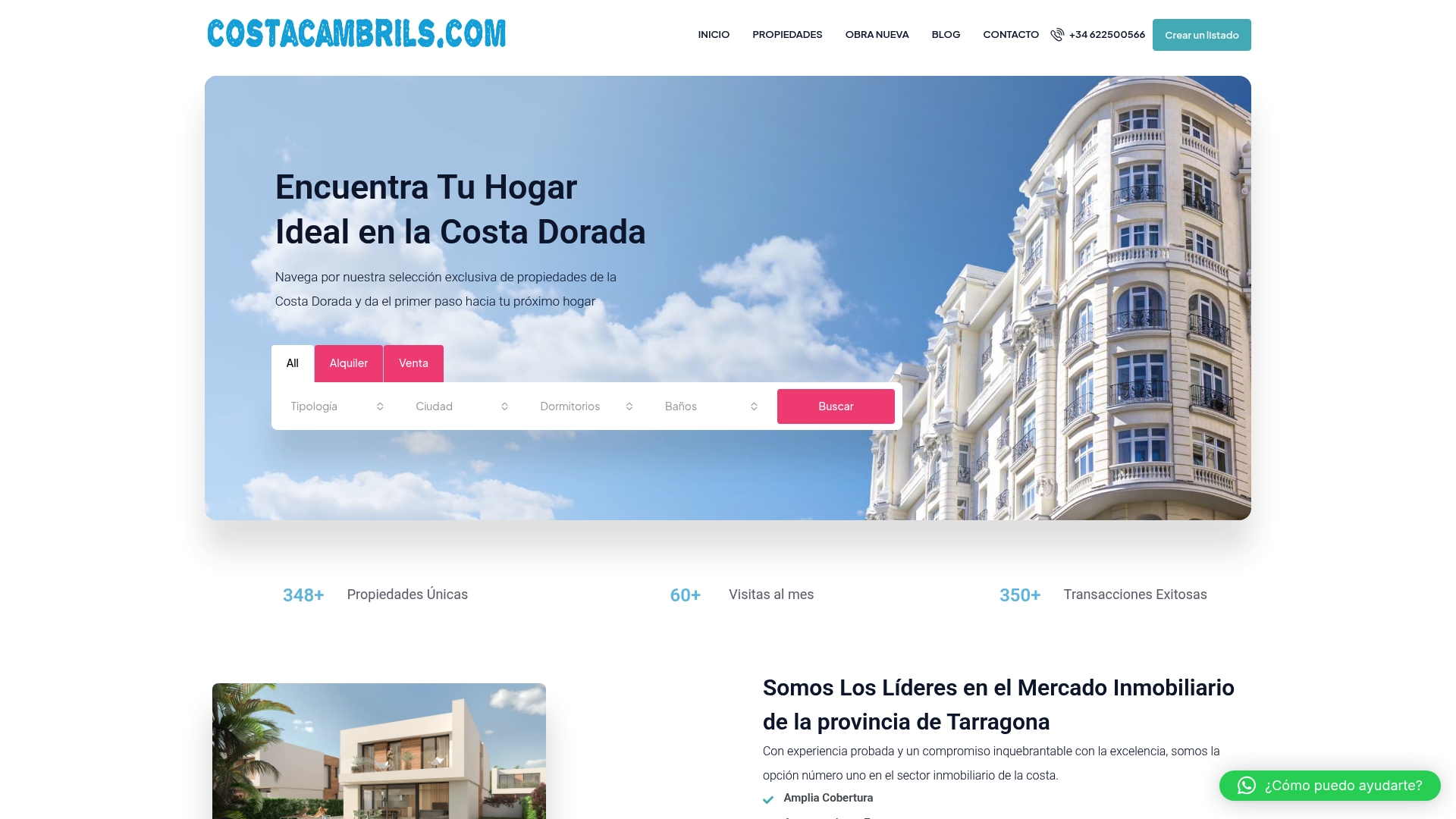
Costacambrils provides expat buyers with detailed property checklists, independent legal advisory, and direct access to exclusive listings in Cambrils and the surrounding Costa Dorada area. The team covers everything from NIE registration to title verification and mortgage coordination for international buyers. For expats targeting the luxury segment, the luxury property investment guide for 2026 from Costacambrils outlines the specific steps, market conditions, and due diligence requirements for high-value purchases in this market. If you are considering a villa, apartment, or new development in the region, the checklist for buying villas is a practical next step.
FAQ
What extra costs should expats budget for when buying property abroad?
Buyers should budget 10–15% above the listing price to cover transfer taxes, legal fees, notary charges, and property registration. These costs are standard in markets like Spain and are not negotiable.
Do expats need a local lawyer to buy property overseas?
Yes. An independent local lawyer verifies title history, checks for liens and permits, and protects your deposit before you sign any contract. Never use a lawyer recommended by the seller or the selling agent.
How does currency risk affect expats buying property abroad?
Exchange rate movements can significantly increase the actual cost of a property priced in a foreign currency. Forward contracts lock your exchange rate months before completion, giving you budget certainty regardless of market fluctuations.
Should expats rent before buying property in a new country?
Renting for 2–3 months upon arrival lets you assess neighborhoods in person, beyond what photos or tourist-season impressions reveal. It also gives you time to view multiple properties before committing to a purchase.
What is an exit trigger in overseas property investment?
An exit trigger is a predefined condition, such as rental yields falling below a target or a major tax policy change, that signals when to sell. Setting exit triggers before purchase removes emotion from the decision and protects your investment against market shifts.
Recommended
- Checklist for Buying New Homes 2026: Full Guide – Inmobiliaria Costa Cambrils
- Apartment Buying Checklist 2026: Your Step-by-Step Guide – Inmobiliaria Costa Cambrils
- Property Buying Checklist: Steps for Smart Buyers in 2026 – Inmobiliaria Costa Cambrils
- Checklist for Buying Villas: 2026 Buyer’s Guide – Inmobiliaria Costa Cambrils