TL;DR:
- A property appraisal is a licensed, unbiased estimate of a property’s market value that informs lending, legal, and sales decisions. It follows USPAP standards, ensuring reports are legally valid and credible in court and financial transactions. The cost of a typical appraisal ranges from $300 to $600, depending on property complexity and location.
A property appraisal is a licensed professional’s unbiased estimate of a property’s market value, and it is the single most reliable tool homeowners and buyers have for making sound real estate decisions. Understanding why use property appraisals matters because the number on an appraisal report determines how much a lender will finance, how a court will settle a dispute, and whether a buyer pays a fair price. Appraisals follow the Uniform Standards of Professional Appraisal Practice (USPAP), the national ethical and performance framework that governs every licensed appraiser in the United States. Without that standard, valuations would carry no legal weight. This guide breaks down the appraisal process, its costs, its legal role, and the specific moments when ordering one protects your investment.
Why use property appraisals: the core case
The strongest reason to commission a property appraisal is financial protection. Appraisals prevent overpayment and loan overextension by giving buyers and lenders an objective number grounded in market data, not emotion or negotiation pressure. That protection runs in both directions: sellers avoid underpricing, and buyers avoid paying above what the market supports.
Mortgage lenders treat appraisals as a risk management tool. Lenders use appraisals to cap financing at a property’s actual market value, which directly sets the loan-to-value ratio and, by extension, your interest rate and down payment requirement. A buyer who skips an independent appraisal and relies on a seller’s asking price is essentially letting the other side of the negotiation set the terms of their mortgage.
USPAP compliance also gives appraisal reports legal standing that informal valuations simply do not have. Courts, lenders, and tax authorities accept USPAP-compliant reports as credible evidence. Broker price opinions and automated valuation models do not carry the same weight in legal proceedings or mortgage underwriting.
What does a property appraisal actually include?
A licensed appraiser conducts a physical inspection and then cross-references the findings against market data. Appraisers document square footage, condition, age, layout, and features during the visit. They then compare the property to recent sales of similar homes in the same area. The result is a written report that assigns a defensible market value.

The appraisal report covers location, size, age, condition, comparable recent sales, and local market conditions. Each factor receives a dollar adjustment that moves the final value up or down relative to the comparables. A home with a renovated kitchen in a neighborhood where most comparables have original kitchens will receive a positive adjustment for that feature.
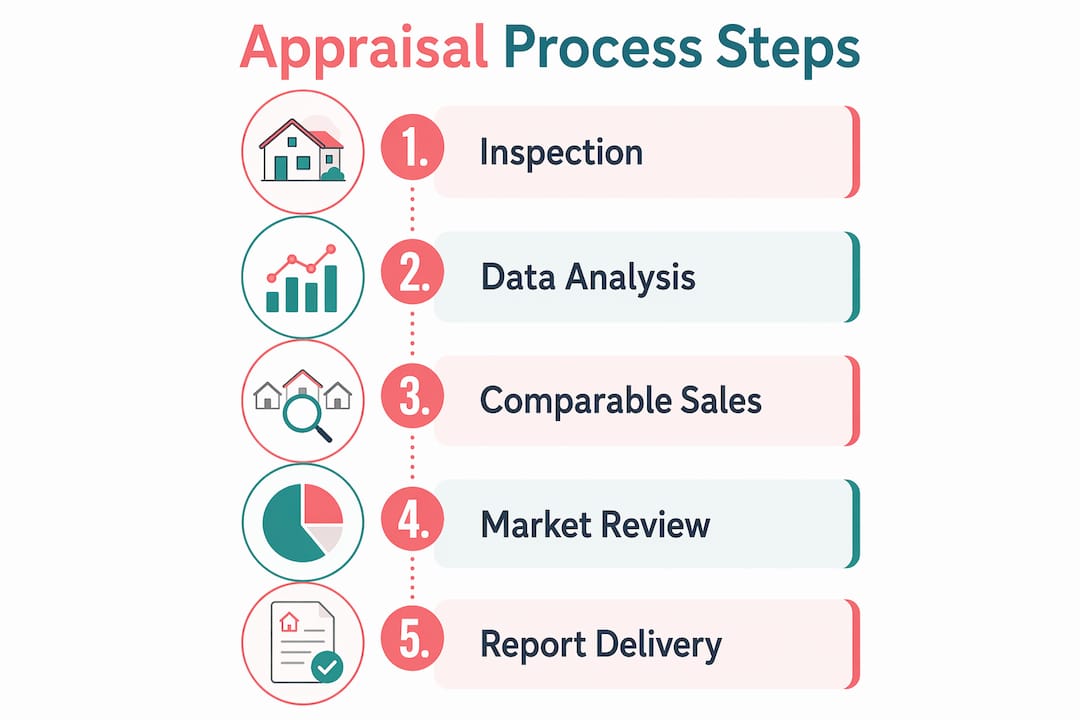
One distinction that surprises many homeowners: appraisers are not home inspectors. Appraisers focus solely on valuation, applying dollar adjustments based on features and comparables, not flagging defective wiring or a failing roof. If you need to know whether the HVAC system is functional, you need a separate home inspection. The appraisal tells you what the property is worth, not whether it is structurally sound.
The property appraisal process varies in length depending on property size and complexity. A straightforward single-family home may take 30 minutes on site. A large or unusual property can require several hours of inspection plus additional research time before the appraiser submits the final report.
Pro Tip: Request a copy of the appraisal report before closing, even if the lender ordered it. You paid for it, and reviewing the comparables used can reveal whether the valuation reflects your local market accurately.
Key factors an appraiser analyzes:
- Location and neighborhood trends: Proximity to schools, transit, and amenities affects value directly.
- Physical condition: Visible wear, recent renovations, and deferred maintenance all receive adjustments.
- Square footage and layout: Usable living space is measured and compared to nearby sales.
- Comparable recent sales: Sales within the past 6–12 months in the same area anchor the value estimate.
- Local market conditions: A seller’s market pushes values up; a buyer’s market pulls them down.
Why is property valuation important for buyers and sellers?
The importance of property valuation extends well beyond the mortgage application. A professional appraisal serves as what the industry calls a third-party reality check, removing emotion from a transaction where both sides are financially and personally invested. That objectivity is what makes the report trusted by lenders, courts, and tax authorities alike.
“Appraisals serve as a third-party reality check, removing emotion and providing unbiased valuations critical in financial transactions such as mortgage underwriting, divorce, and probate.”
The most common situations that require or strongly benefit from a formal appraisal:
- Mortgage financing: Every conventional lender requires an appraisal before approving a purchase loan. The report confirms the collateral value matches the loan amount.
- Refinancing: When you refinance, the lender needs a current market value to recalculate your loan-to-value ratio and set new terms.
- Home equity loans or lines of credit: Lenders base the credit limit on appraised value minus your outstanding mortgage balance.
- Divorce proceedings: Courts require a USPAP-compliant appraisal to divide real property equitably between parties.
- Probate and estate settlement: Executors need a certified value to distribute assets or calculate estate taxes accurately.
- Pre-listing pricing: Sellers who order an appraisal before listing avoid the costly mistake of pricing too high and sitting on the market, or too low and leaving money behind.
One critical distinction: a property appraisal is not the same as a government tax assessment. Appraisals comply with USPAP and are transaction-specific reports. Tax assessments are mass calculations run by local governments for taxation purposes and often lag behind actual market conditions by years. Relying on your tax assessment to price or finance a property is a reliable way to get the number wrong.
Using informal valuations in legal or financial scenarios carries real risk. Informal valuations risk report rejection and costly disputes when courts or lenders require USPAP-compliant documentation. The legal aspects of any property transaction deserve the same level of rigor as the financial ones, which is why understanding legal protections in property purchases matters before you sign anything.
How much does a property appraisal cost?
A standard single-family home appraisal costs between $300 and $600 in 2026. Complex properties, rural locations, or homes with unusual features cost more because the appraiser must spend additional time gathering comparable data from a wider geographic area.
| Property type | Typical cost range | Key cost driver |
|---|---|---|
| Standard single-family home | $300–$600 | Straightforward comps, local data available |
| Large or luxury home | $600–$1,500+ | More square footage, fewer direct comparables |
| Rural or remote property | $500–$1,200+ | Travel time, limited comparable sales data |
| Desktop or drive-by appraisal | $75–$200 | No physical inspection, limited scope |
| Multi-unit residential property | $800–$2,000+ | Income approach adds complexity |
The inspection itself takes 30 minutes to several hours depending on property size and complexity. After the visit, the appraiser researches comparables, writes the report, and submits it, typically within a few business days to two weeks. Turnaround time varies by market demand and appraiser workload.
Desktop appraisals, which rely on public records and photos rather than a physical visit, cost less but carry limitations. Lenders accept them for lower-risk refinances in some cases, but they are not appropriate for purchase transactions or legal proceedings where accuracy is non-negotiable.
Pro Tip: In a competitive market, order a pre-purchase appraisal before making an offer. Knowing the appraised value gives you a hard ceiling for your bid and a factual basis for negotiating if the seller’s price exceeds it.
When should you order a property appraisal?
The right time to commission an appraisal depends on your goal, but several situations make one clearly worthwhile:
- Before buying: Confirm the asking price reflects actual market value before committing to a mortgage. A low appraisal is not necessarily a sign of an overpriced property. It means recent comparable sales do not support the contract price, which often triggers renegotiation or requires the buyer to cover the gap in cash.
- Before selling: Set a realistic list price backed by data, not guesswork. Overpriced listings sit on the market and eventually sell for less than a well-priced listing would have.
- When refinancing: Your lender will order one, but understanding the process helps you prepare the property and dispute errors if the value comes in lower than expected.
- For legal proceedings: Divorce, probate, and estate settlement all require certified valuations. A USPAP-compliant report is the only document courts consistently accept.
- For insurance purposes: After a major renovation or in a dispute over a claim, an appraisal establishes the current replacement value of the property.
- For investment planning: Knowing the current market value of a property helps you calculate return on investment, decide whether to sell or hold, and time upgrades for maximum impact.
The steps to evaluate a property follow a consistent methodology regardless of the purpose. Knowing what appraisers look for lets you present your property in the best possible condition before the inspection.
Key Takeaways
A property appraisal is the only USPAP-compliant, legally defensible valuation that protects homeowners and buyers from overpaying, under-financing, and costly legal disputes.
| Point | Details |
|---|---|
| Appraisals prevent overpayment | An objective market value stops buyers from paying above what comparable sales support. |
| USPAP compliance ensures legal standing | Courts, lenders, and tax authorities accept USPAP-compliant reports; informal valuations are routinely rejected. |
| Cost is predictable | Standard single-family appraisals run $300–$600 in 2026, with higher fees for complex or rural properties. |
| Appraisals differ from inspections | Appraisers value property; home inspectors assess physical condition. You need both for a complete picture. |
| Timing matters | Order an appraisal before buying, selling, refinancing, or entering any legal proceeding involving real property. |
What 15 years in real estate taught me about appraisals
Most buyers treat the appraisal as a formality. That is a mistake I have watched cost people real money. The appraisal is the one moment in a transaction where someone with no financial stake in the outcome tells you what the property is actually worth. That independence is the whole point.
The most common misconception I encounter is that a low appraisal means the appraiser got it wrong. In most cases, it means the market data does not support the agreed price. That is useful information, not an obstacle. Buyers who understand this use a low appraisal as leverage to renegotiate. Buyers who do not understand it scramble to cover the gap in cash or walk away from a deal they could have restructured.
The second misconception is that a broker’s price opinion or an automated valuation model is “close enough” for legal or financial purposes. It is not. USPAP independence exists precisely because appraiser independence prevents lenders, sellers, and buyers from pressuring the valuation in their favor. When that independence is absent, the number is just an opinion. Courts and lenders know the difference.
My advice: treat the appraisal fee as the cheapest form of due diligence available in real estate. A few hundred dollars for a certified valuation is a fraction of what a mispriced transaction costs you in overpayment, bad loan terms, or a rejected legal filing.
— Oscar
Costacambrils: expert support for your property decisions
Buying or investing in property on Spain’s Costa Dorada involves the same financial stakes as any real estate market, and the same need for credible valuations.

Costacambrils provides property evaluation services alongside its full portfolio of luxury homes, villas, and new developments in Cambrils and the surrounding Costa Dorada region. Whether you are buying your first property in Spain or expanding an existing portfolio, the team at Costacambrils connects you with licensed professionals who understand local market conditions. For a broader view of what makes real estate investment in this region worth considering, the 2026 real estate investment guide covers current market advantages in detail. Reach out to Costacambrils directly to discuss your property goals and get the valuation support your investment deserves.
FAQ
What is a property appraisal in real estate?
A property appraisal is a licensed professional’s written estimate of a property’s market value, conducted according to USPAP standards. It is used by lenders, courts, and buyers to establish a credible, unbiased value for a specific property at a specific point in time.
How is a property appraisal different from a home inspection?
An appraisal determines market value by analyzing comparable sales and property features. A home inspection evaluates the physical condition of systems and structures. You need both, but they serve entirely different purposes.
How much does a property appraisal cost in 2026?
A standard single-family home appraisal costs $300–$600 in 2026. Complex properties, rural locations, and luxury homes with few direct comparables typically cost more due to additional research and travel time.
Can a low appraisal kill a real estate deal?
A low appraisal does not automatically end a deal. It means recent comparable sales do not support the contract price, which typically leads to renegotiation, a price reduction, or the buyer covering the difference in cash.
Do I need an appraisal if I am paying cash for a property?
No lender requires an appraisal on an all-cash purchase, but ordering one independently is still a sound decision. It confirms you are paying a fair market price and provides documentation useful for future financing, insurance, or resale.
Recommended
- Pasos para evaluar propiedades: guía completa 2026 – Inmobiliaria Costa Cambrils
- What Is Property Title Insurance? A Buyer’s Guide – Inmobiliaria Costa Cambrils
- Qué es una evaluación inmobiliaria: guía práctica – Inmobiliaria Costa Cambrils
- Residential Property Management for Owners: 2026 Guide – Inmobiliaria Costa Cambrils