
TL;DR:
- Buyers should verify property agents’ licenses and public records before working with them to avoid fraud and ensure professionalism. Evaluating performance data, specialization, and references helps determine an agent’s capabilities and fit for specific property types. Comparing multiple agents with a structured approach reduces errors and leads to smarter, financially sound decisions.
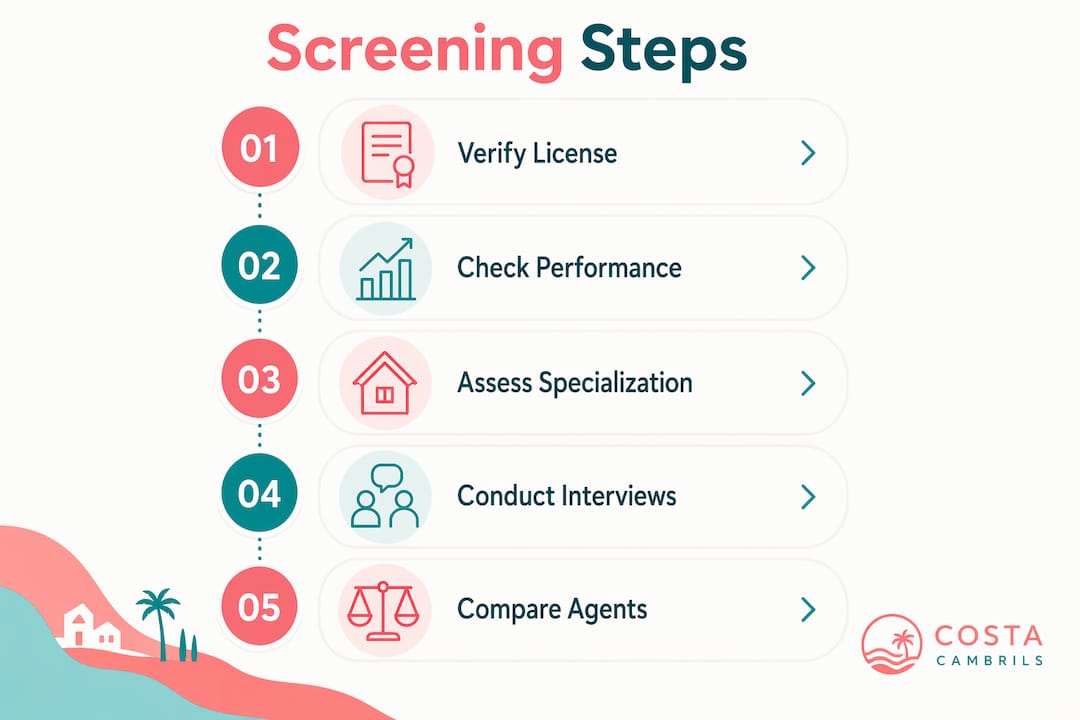
Screening property agents is the process of verifying their licenses, performance history, and communication skills before you commit to working with them. Most buyers skip this step and rely on a single referral, but 59% of sellers contact just one agent without comparing alternatives. That single-source approach leaves money and negotiating power on the table. A structured evaluation, covering credentials, transaction data, and personal fit, is the clearest path to a successful property deal.
How to screen property agents: credentials and public records
Agent screening starts with license verification. Every legitimate agent holds an active license issued by a recognized regulatory authority, and that status is publicly searchable. Before any meeting, pull up the official public register for your market and search the agent’s name and phone number.
Checking credentials through official channels reveals more than just license status. Public registers list disciplinary history, including advisory letters, fines, and suspensions. An agent with a clean record and an active license passes the first filter. One with sanctions on file requires a direct explanation before you proceed.
Scammers clone agent identities but cannot replicate registered phone numbers. Always verify by phone number in the official registry, not just by name. A name match with a phone number mismatch is the clearest sign of fraud.
Two additional legal checkpoints protect you before any work begins:
- Confirm the agent holds a current, active license in the jurisdiction where your property sits.
- Ask whether disciplinary sanctions appear on their public record and request an explanation if they do.
- Verify that the agent provides a written client agreement before starting work. This document must specify scope, fees, and commission disclosures.
- Check that commission rates and any referral arrangements are disclosed in writing upfront.
Pro Tip: Search the agent’s phone number in the public registry first, not their name. Phone numbers cannot be cloned the way names can.
What performance metrics reveal about an agent’s real ability
Credentials confirm that an agent is allowed to practice. Performance data tells you whether they are actually good at it. The two metrics that matter most are average days on market (DOM) and list-to-sale price ratio, both measured over the past 12–24 months.

Days on market measures how long a property sits before going under contract. A low DOM relative to the local average signals that the agent prices accurately and markets well. A high DOM often means overpricing or weak buyer outreach. The list-to-sale price ratio compares the original asking price to the final sale price. Ratios consistently at or above 98% indicate strong negotiation skills and realistic pricing from the start.
Agents who cannot provide this data signal inadequate professionalism or poor record-keeping. Either way, that is a disqualifying red flag.
| Metric | What to ask for | Red flag |
|---|---|---|
| Average days on market | 12–24 month average for their listings | Significantly above local market average |
| List-to-sale price ratio | Percentage of listings sold at or above asking | Consistently below 95% |
| Transaction count | Number of closed deals in your target area | Fewer than 5 transactions in 12 months |
| Property type specialization | Percentage of deals in your property category | No deals in your specific property type |
Specialization matters as much as volume. An agent who specializes in luxury homes may lack the knowledge needed for a suburban single-family purchase. Ask specifically how many transactions they closed in your target neighborhood and property type, not just their overall count.
A high listing price recommendation without a comparative market analysis (CMA) report is another warning sign. Good agents use CMA reports to justify pricing, not inflated numbers designed to win your listing. If an agent quotes a price significantly above comparable sales without showing their work, walk away.
Pro Tip: Ask for a sample CMA from a recent transaction. A well-prepared CMA shows neighborhood comps, price adjustments, and a clear pricing rationale. It tells you more about an agent’s skill than any verbal pitch.
What questions to ask during agent interviews
Interviewing multiple candidates is the most underused step in choosing a real estate agent. Standardized questions across all candidates let you compare answers directly instead of relying on impressions shaped by whoever you spoke with last.
Start every interview with these core questions:
- How many transactions did you close in this neighborhood in the past 12 months?
- What is your average days on market for listings in this price range?
- How do you prefer to communicate, and how quickly do you respond to client messages?
- Walk me through your negotiation approach when a buyer offers below asking price.
- Can you provide contact details for three past clients I can call directly?
Communication style is not a soft factor. Agents who use pressure tactics or give evasive answers often mask poor performance behind confident delivery. Pay attention to how an agent handles questions they cannot answer well. Deflection, vague generalities, or irritation at direct questions are all red flags.
Watch for these specific warning signs during the interview:
- Reluctance to provide past client references.
- Inability to quote their own DOM or price ratio from memory.
- Pressure to sign an agreement before you have finished your evaluation.
- Vague answers about their fee structure or commission split.
Reference checks close the loop. Call past clients and ask one direct question: “Would you hire this agent again, and why?” The answer to that single question tells you more than any credential or metric. For buyers working across language barriers, bilingual agent capabilities add another layer of compatibility worth assessing during the interview.
How to compare multiple agents objectively before deciding
Gut feeling alone produces poor decisions when choosing a real estate professional. A simple comparison table eliminates the bias that comes from recency, charm, or a well-timed referral. Use a spreadsheet to score each candidate across the same criteria before you make a final call.
Set your evaluation criteria before the first interview, not after. Deciding what matters most in advance prevents you from unconsciously adjusting your standards to favor whoever impressed you most recently. Weight the categories that matter most to your situation: a first-time buyer may prioritize communication responsiveness, while an investor may weight transaction volume and DOM data more heavily.
Pro Tip: Score each candidate on a 1–5 scale across five categories: license status, performance data, specialization match, communication style, and reference quality. Total the scores before making your decision. The number often confirms what your instinct already suspects.
Effective choices combine hard data with personal compatibility. An agent with strong metrics but poor communication will frustrate you throughout the transaction. An agent you like personally but who cannot produce performance data will cost you money. Both dimensions must clear a minimum threshold.
Contract terms deserve the same scrutiny as the agent’s credentials. Limit initial contracts to six months to avoid long-term commitments before you have seen the agent perform. Require a signed client agreement before any work begins. That document should specify the scope of services, the fee structure, and the conditions for early termination. Negotiate these terms before signing, not after a deal is already in motion. For a full checklist of buyer steps, the property buying checklist from Costacambrils covers agent evaluation alongside every other stage of the purchase process.
Key Takeaways
Screening real estate professionals requires verifying credentials, analyzing 12–24 month performance data, and assessing communication fit before signing any agreement.
| Point | Details |
|---|---|
| Verify credentials first | Search the agent’s phone number in the official public register before any meeting. |
| Request performance data | Ask for DOM and list-to-sale price ratio covering the past 12–24 months. |
| Interview at least three candidates | Comparing three or more agents reveals differences in expertise and style that one interview cannot. |
| Check references directly | Call past clients and ask whether they would hire the agent again. |
| Limit initial contracts | Cap the first agreement at six months and get all terms in writing before work starts. |
What I’ve learned from watching buyers skip the screening step
The most expensive mistakes I’ve seen in real estate transactions share one root cause: buyers trusted a name without verifying the numbers behind it. An agent with a polished pitch and a strong referral network can still have a list-to-sale price ratio that consistently underperforms the local market. That gap costs sellers tens of thousands of dollars and costs buyers weeks of wasted time on overpriced listings.
The metric that surprises buyers most is days on market. Most people assume a fast sale means a good agent. It sometimes does. But an unusually fast sale at a price well below asking can mean the agent underpriced to close quickly and collect their commission. The DOM number only tells the full story when you pair it with the price ratio.
I’ve also seen buyers dismiss the contract term negotiation as a minor detail. It is not. An agent locked into a 12-month exclusive agreement has no urgency to perform in month two. A six-month contract with clear performance expectations changes that dynamic entirely. The agent knows you can walk away, and that knowledge sharpens their focus.
The buyers who get the best outcomes treat agent selection like a hiring decision. They prepare questions in advance, they check references, and they read the contract before signing it. That process takes a few extra hours. It saves months of frustration and, in many cases, significant money. For buyers working in specialized markets like the Costa Dorada, local agent expertise in luxury property types adds a layer of value that generic agent rankings simply cannot capture.
— Oscar
Trusted agents for the Costa Dorada market
Costacambrils connects buyers and investors with verified agents who specialize in luxury properties across Cambrils and the Costa Dorada region. Every agent in the Costacambrils network carries documented transaction histories, local market knowledge, and client reviews you can read before making contact.

Buyers working with Costacambrils get access to agent performance data, property evaluations, and legal advisory services under one platform. Whether you are purchasing a beachfront villa or evaluating real estate investment options along the Costa Dorada, the team at Costacambrils matches you with agents whose track records align with your specific property goals. Visit costacambrils.com/agencia to review agent profiles and start your search with confidence.
FAQ
How do I verify a property agent’s license?
Search the agent’s name and phone number in your market’s official public register. A phone number mismatch between the agent’s card and the registry is the clearest sign of fraud.
What performance metrics should I ask an agent for?
Request their average days on market and list-to-sale price ratio for the past 12–24 months. Agents who cannot provide this data signal poor professionalism or inadequate record-keeping.
How many agents should I interview before choosing one?
Interview at least three candidates. Comparing multiple agents provides contrast in expertise, communication style, and local market knowledge that a single interview cannot reveal.
What contract terms should I negotiate with a property agent?
Limit the initial agreement to six months and require a signed client agreement before any work begins. The contract must specify scope, fees, and conditions for early termination.
What are the biggest red flags when evaluating realtors?
Key red flags include an inability to provide transaction data, pressure to sign before your evaluation is complete, evasive answers about fees, and a high listing price recommendation without a comparative market analysis to support it.
Recommended
- Property Buying Checklist: Steps for Smart Buyers in 2026 – Inmobiliaria Costa Cambrils
- How to Select a Real Estate Agent: A Buyer’s Guide – Inmobiliaria Costa Cambrils
- Checklist for Buying New Homes 2026: Full Guide – Inmobiliaria Costa Cambrils
- Apartment Buying Checklist 2026: Your Step-by-Step Guide – Inmobiliaria Costa Cambrils